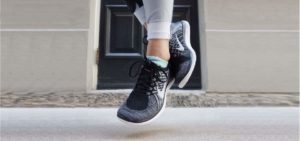
Orthopedic walking shoes are shoes with extra room, steady support and space for your own insoles. They suit people with foot shape changes, swelling or sore feet, and anyone who has found regular shoes uncomfortable for walking, working or standing.
This guide explains what makes a walking shoe orthopedic, what to check when you shop, and how thirteen pairs for men and women compare.

Orthopedic shoe basics
- Walking and athletic shoes are good for daily wear when they support your feet and let them breathe.[1]
- If you have bunions or hammertoes, you may need extra-wide or deep shoes.[1]
- Orthotics range from over-the-counter inserts to custom-made devices that a podiatrist designs for your foot.[3]
- Medicare covers therapeutic shoes and inserts only for people with diabetes and severe diabetes-related foot disease.[2]
- Try on shoes at the end of the day, when your feet are largest.[4]
What Makes a Walking Shoe Orthopedic?
No single standard defines an orthopedic walking shoe. In practice, the term describes shoes that leave room for orthotics, such as removable insoles or extra depth, and that fit roomier, especially around the forefoot and toes. Many come in wide widths. They add stability, cushioning and shock-absorbing midsoles, and they avoid high heels and other features that strain the feet.
Therapeutic shoes are a medical category. They are custom footwear that protects and supports feet with conditions such as a foot ulcer or deformity.[2]
The Importance of Orthopedic Walking Shoes
Shoes that are too narrow, too short or too unstructured can cause discomfort and sores. If your feet have changed shape, for example from bunions, hammertoes or Charcot’s foot, you may need special shoes or inserts.[1]
- Shoes That Feel Too Narrow – If your regular shoes pinch, first check whether a wide-width walking shoe solves the problem. The toe box should leave room to wiggle your toes.[4]
- Shoes for Larger Bodies – See our guides to walking shoes for overweight men and overweight women. This guide covers shoes for people with structural foot problems or discomfort while walking.
- Shoes for Heel Pain or Ball of Foot Pain – For heel pain, see our guides to plantar fasciitis and high arch support. For pain in the ball of the foot, see shoes for metatarsalgia.
Features of a Good Orthopedic Walking Shoe
- Fit – Look for extra depth, a wider width and a non-binding fit. Shoes that fit well and protect your feet matter most if diabetes has caused nerve damage.[1] Extra depth also lets you add orthotics.
- Removable Insoles – A removable insole lets you use your own orthotic, whether it is an over-the-counter insert or a custom device.[3]
- Comfort and Support – Choose a firm heel counter that grips your heel, plus cushioning and a smooth interior without rough seams.[4]
- Low Heel and Stable Platform – A low heel and a uniform sole add stability. Avoid pointed toes and high heels, which put too much pressure on your toes.[1]
https://www.youtube.com/watch?v=qJUKNfAphgc
How We Chose These Shoes
We do not test shoes ourselves. We compare each model’s fit, widths, cushioning, support and removable insoles using The web and the makers’ product details, and we only list shoes sold on the web in the US. We looked at five things: arch support, grip, comfort, padding and room for your own insoles. Brands do not pay to be included, but we may earn a commission from purchases.
Frequently Asked Questions (FAQ) on Orthopedic Walking Shoes
- How do I choose orthopedic shoes?
Start with the problem you want to solve. If your toes are cramped, look for a roomy toe box. If your feet have changed shape, you may need extra-wide or deep shoes, or special shoes and orthotics.[1] Try shoes on at the end of the day, when your feet are largest, and check that you can wiggle your toes.[4] - Does Medicare pay for orthopedic shoes?
Medicare Part B covers therapeutic shoes and inserts only for people with diabetes and severe diabetes-related foot disease. The doctor who treats your diabetes must certify the need, and a podiatrist or other qualified doctor must order the shoes.[2] - Are cushioned shoes better for walking?
Cushioning absorbs impact, but fit matters more. Shoes should grip your heel, leave room for your toes and bend where your foot bends. Replace them when the cushioning wears out, because shoes lose about 45 percent of their shock absorption by 500 miles.[4]
Key Specs
| No. | Shoe | Type | Closure | Width options | Drop / Cushion | Weight |
|---|---|---|---|---|---|---|
| 1 | Vionic Colbie | Casual sneaker | Slip-on | Medium, Wide | – | – |
| 2 | New Balance 928v3 | Walking | Lace-up | Medium, Wide, X-Wide | ABZORB | – |
| 3 | Under Armour Charged+ Assert 11 | Running | Lace-up | Medium, Wide, X-Wide | – | 10.2 oz |
| 4 | New Balance 608 V5 | Cross trainer | – | Medium, Wide, X-Wide | ABZORB | – |
| 5 | Under Armour Charged Assert 10 | Walking | – | Medium, Wide, X-Wide | 10 mm drop / Charged Cushioning | 9.5 oz |
| 6 | Orthofeet Avery Island / Chelsea (women's) | Dress | – | Medium, Wide, X-Wide | – | – |
| 7 | New Balance 577V1 | Walking | Lace-up | Medium, Wide, X-Wide | ABZORB | – |
| 8 | adidas X_PLR Path | Sneaker | Lace-up | Medium | Cloudfoam | – |
| 9 | Dr. Comfort Fisherman / Breeze (women's) | Sandal | Strap | Medium, Wide, X-Wide | – | – |
| 10 | Propét Stability X Fly | Walking | – | Medium, Wide, X-Wide | EVA | – |
| 11 | Propet Stability Walker | Walking | Lace-up | Medium, Wide, X-Wide | – | – |
| 12 | Under Armour Charged Surge 4 | Running | – | Medium | 8 mm drop / Charged Cushioning | – |
| 13 | Propet TravelFit / TravelFit Prestige (women's) | Walking | Lace-up | Medium, Wide, X-Wide | – | – |
– = not stated by the maker. Specs as stated by the maker, not tested by us.
Our Orthopedic Walking Shoe Picks
These thirteen pairs cover everyday walking, dress, sandal and wide-base options. If you buy through the links on this page, we may earn a commission at no extra cost to you.
1
Slip-On Arch Support Sneaker
Vionic Colbie - Men


Vionic Colbie - Women


- The VIO MOTION footbed has contoured arch support, shock-absorbing cushioning and a deep heel cup for stability.
- The midsole is light and flexible, and the outsole is cushioned and made for everyday wear.
- Wear them for a few hours at a time at first so your feet can adjust.
2
Motion Control Walking Shoe
New Balance 928v3 - Men


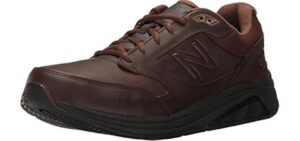
New Balance 928v3 - Women


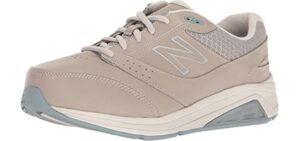
- Motion control design gives extra stability and alignment for walkers who need support.
- A Rollbar post reinforces both sides of the midsole to limit rearfoot movement.
- Abzorb cushioning absorbs impact at the heel and forefoot, and the leather upper holds its structure with daily wear.
3
Neutral Cushioned Trainer Shoe
Under Armour Charged+ Assert 11 - Men


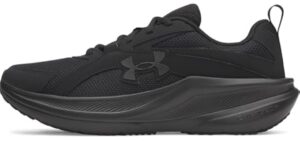
Under Armour Charged+ Assert 11 - Women


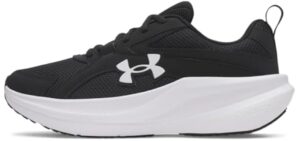
- The mesh upper has leather overlays for midfoot support, and at least 30 percent of the upper is recycled material.
- Charged+ midsole cushioning gives a soft ride, and flex grooves in the rubber outsole help at toe-off.
- It weighs about 10.2 oz and comes in medium, wide and extra-wide widths.
4
Casual Cross Trainer, Suede Upper
New Balance 608 V5 - Men


New Balance 608 V5 - Women


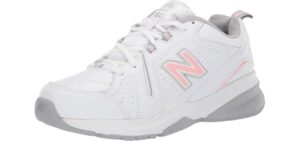
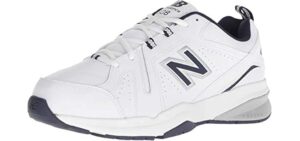
- An Abzorb heel pad absorbs impact, and a molded insert adds cushioning underfoot.
- The suede upper breaks in to your foot, and dual-density collar foam steadies the ankle.
- A smooth interior liner has few seams to rub, and the EVA midsole has a shank for midfoot stability.
5
Light Cushioned Trainer Shoe
Under Armour Charged Assert 10 - Men


Under Armour Charged Assert 10 - Women


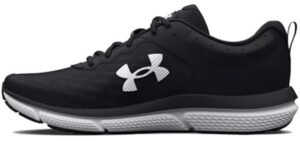
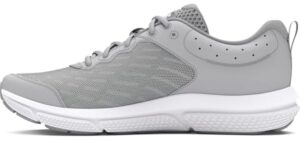
- The mesh upper is breathable, with synthetic overlays for durability and support.
- An EVA sockliner adds step-in softness, and the Charged midsole uses compression-molded foam.
- It has a 10 mm drop and weighs about 9.5 oz.
6
Leather Dress Shoe, Orthotic Insole
Orthofeet Avery Island - Men


Orthofeet Chelsea - Women


- The men’s upper is full-grain leather that is easy to clean and looks right at the office.
- A wide toe box gives your toes room, and the shoe fits true to size.
- An orthotic insole has anatomical arch support and layered cushioning.
- The women’s Chelsea opens on both sides, and its tongue flips up, which makes it easier to put on.
7
Leather Walking Shoe, Abzorb Cushioning
New Balance 577V1 - Men


New Balance 577V1 - Women


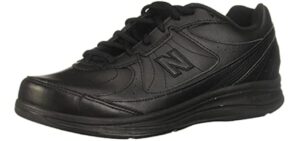
- The full-grain leather upper is durable and breaks in over time.
- Abzorb cushioning in the midsole absorbs impact.
- The outsole is shaped for a natural heel-to-toe stride.
- It comes in medium, wide and extra-wide widths.
8
Light Everyday Sneaker
adidas X_PLR Path - Men


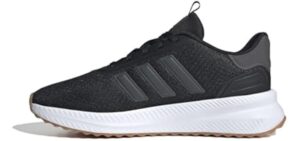
adidas X_PLR Path - Women


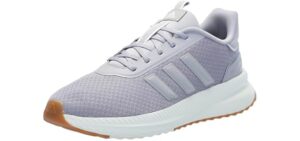
- The mesh upper is breathable, with a soft textile lining.
- The Cloudfoam midsole cushions each step, and the rubber outsole grips well.
- It comes in a medium width.
9
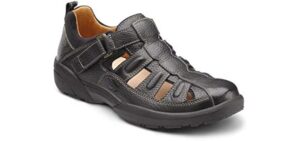
Open Leather Diabetic Sandal
Dr. Comfort Fisherman - Men


Dr. Comfort Breeze - Women


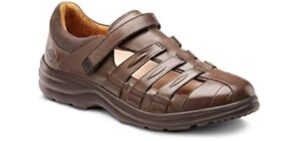
- The full-grain leather upper is soft and breathable, and the open design lets air in around a roomy, protective toe box.
- An adjustable strap makes it easy to adapt the fit when your feet swell.
- The removable footbed has a gel insert, and you can swap it for your own diabetic insert or custom orthotic.
- The men’s sandal comes in sizes 6 to 15 and in medium, wide and extra-wide widths.
10
Knit Walker With Roomy Toe Box
Propét Stability X Fly - Men


Propét Stability X Fly - Women


- The knit mesh upper gives your toes room to spread out.
- Soft PU cushioning has comfort ridges in the forefoot and a gel insert in the heel.
- An EVA midsole and rubber outsole make the stride smooth, and the footbed is removable.
11
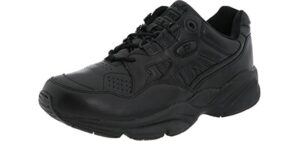
Wide-Base Leather Walking Shoe
Propet Stability Walker - Men


Propet Stability Walker - Women


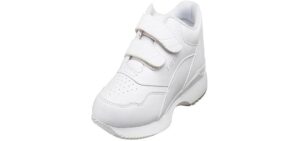
- The forefoot and heel base are wider than usual, which adds stability.
- The PU insole has a heel pad and cushioning ridges, and it is removable so you can fit your own orthotics.
- A rocker profile helps your foot roll through each step.
- The men’s shoe qualifies under the Medicare therapeutic shoe benefit for people with diabetes who meet the rules.[2]
12
Cushioned Everyday Training Shoe
Under Armour Charged Surge 4 - Men


Under Armour Charged Surge 4 - Women


- The breathable mesh upper has synthetic overlays and extra padding around the ankle collar.
- The Charged Cushioning midsole and a molded sockliner give all-day comfort.
- The rubber outsole flexes where you need it at toe-off, and the drop is 8 mm.
13
Light Flexible Walking Shoe
Propet TravelFit - Men
Propet TravelFit Prestige - Women


- The upper is breathable mesh, and the sole is flexible.
- It comes in wide widths.
Removable Gel Insole
1
If your shoes already fit well, a small adhesive insole is a simple way to add arch support without changing the fit. Over-the-counter orthotics are a common first step before custom ones.[3]
- The gel insert adds arch support and drops away before the ball of the foot and the heel, so it does not crowd the shoe.
- The self-sticking backing works in sandals, athletic shoes, dress shoes and work boots.
- You can wash it under water and let it air-dry, and the adhesive renews.
- It comes in two thicknesses: a thicker clear version and a thinner black one.
To Conclude
Orthopedic shoes can look good as well as feel good. Choose by fit first: room for your toes, a secure heel and a footbed you can swap for your own orthotic. If you have diabetes or another medical condition, ask your doctor or podiatrist which shoes and inserts suit you.[1][3]
Index Table: Removable Gel Insole
Index Table: Orthopedic Walking Shoes Compared
| No. | Shoe | Men ♂ | Women ♀ | Features | Brand |
|---|---|---|---|---|---|
| 1 | Vionic® - Slip-On Arch Support Sneaker | 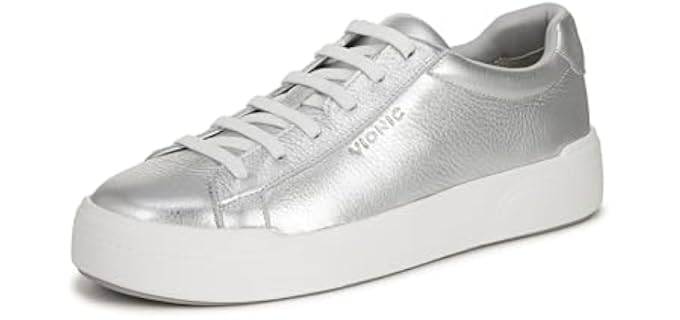 | 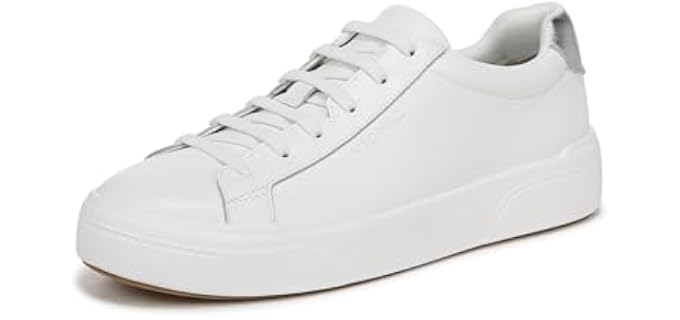 | Vionic | |
| 2 | New Balance® - Motion Control Walking Shoe | 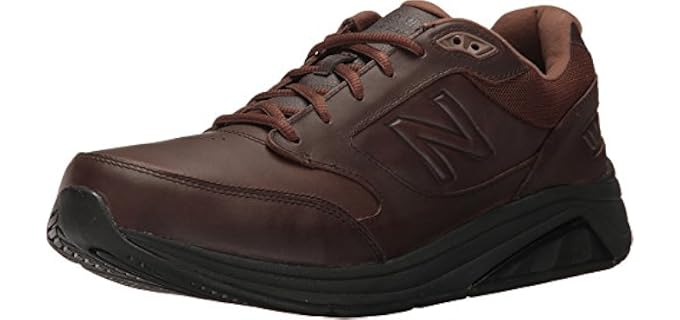 | 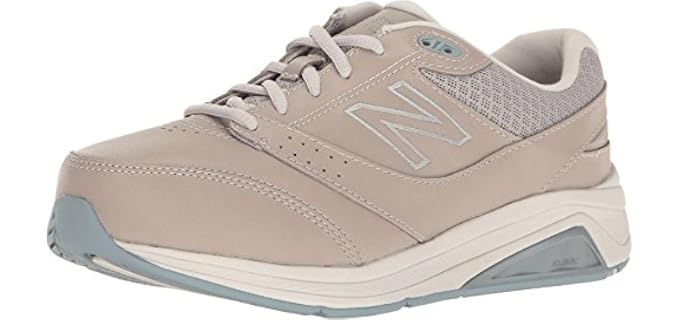 |
| New Balance |
| 3 | Under Armour® - Neutral Cushioned Trainer Shoe | 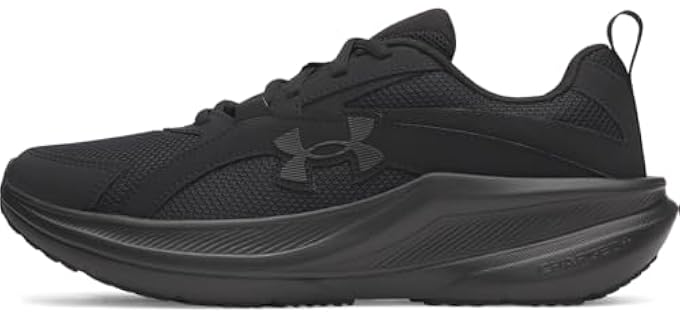 | 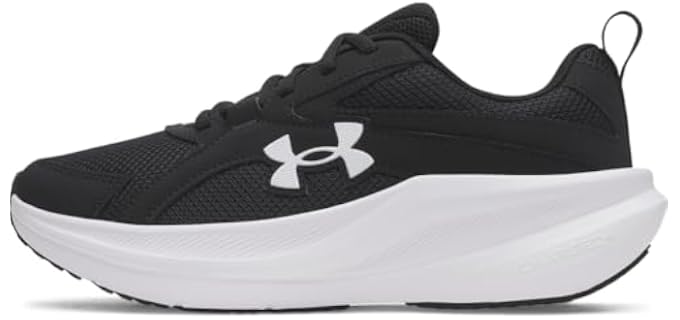 | Under Armour | |
| 4 | New Balance® - Casual Cross Trainer, Suede Upper | 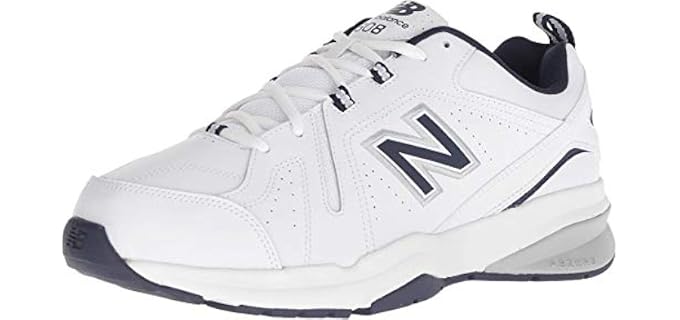 | 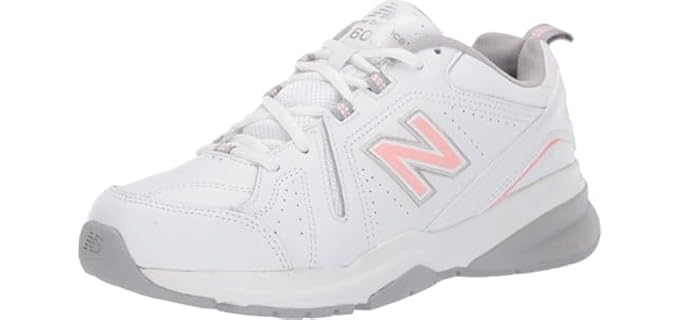 | New Balance | |
| 5 | Under Armour® - Light Cushioned Trainer Shoe | 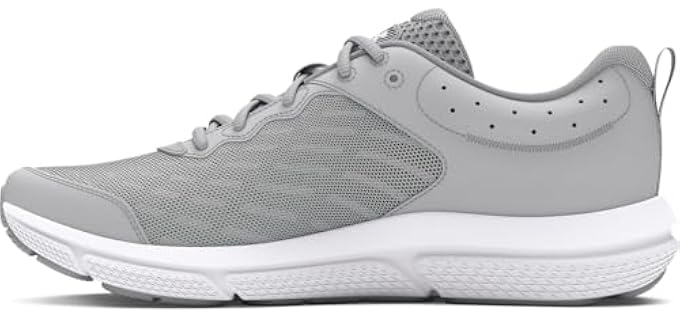 | 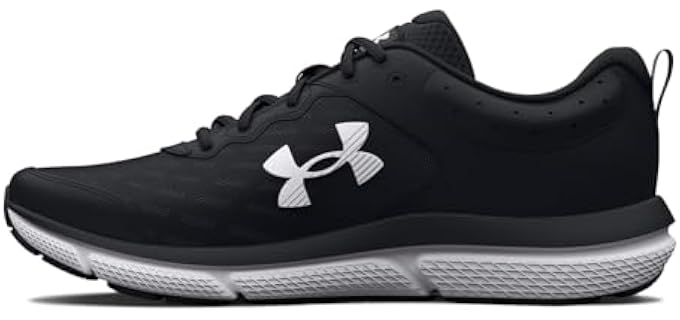 | Under Armour | |
| 6 | Orthofeet® - Leather Dress Shoe, Orthotic Insole | 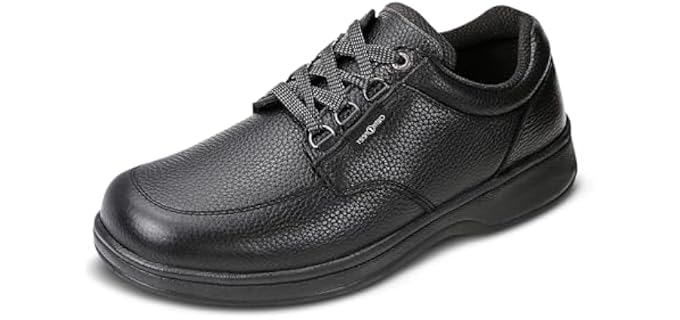 | 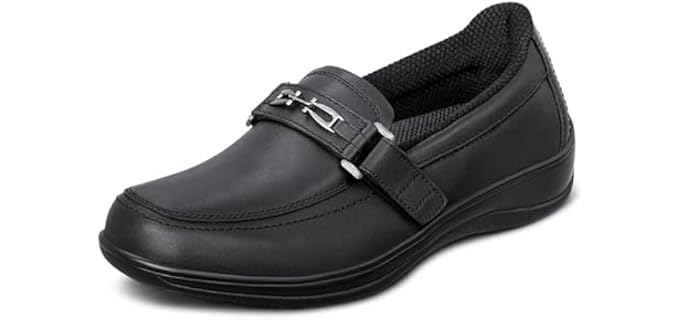 |
| Orthofeet |
| 7 | New Balance® - Leather Walking Shoe, Abzorb Cushioning |  | 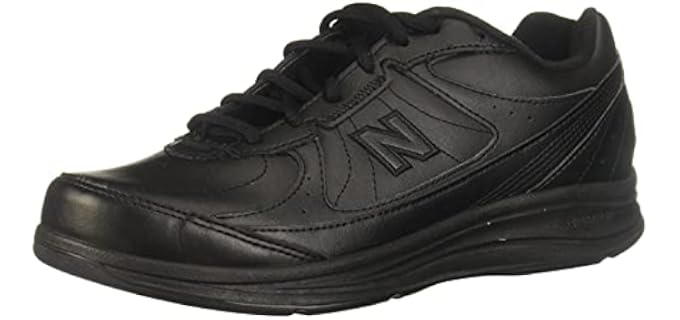 |
| New Balance |
| 8 | adidas® - Light Everyday Sneaker | 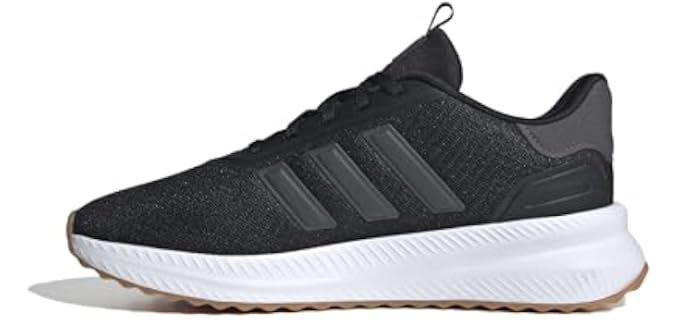 | 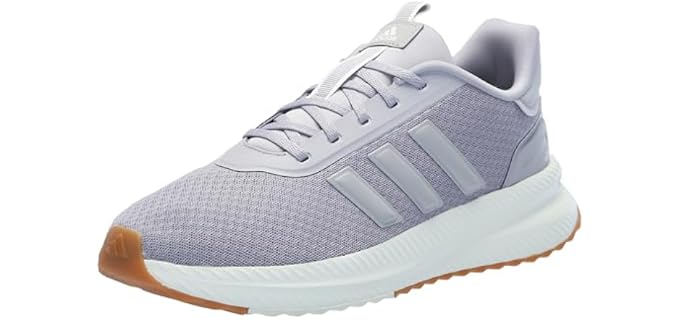 | adidas | |
| 9 | Dr. Comfort® - Open Leather Diabetic Sandal | 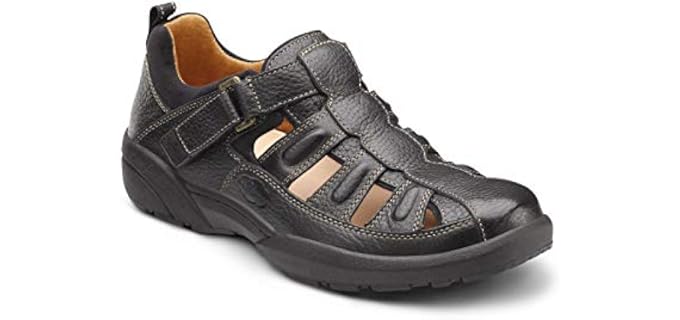 | 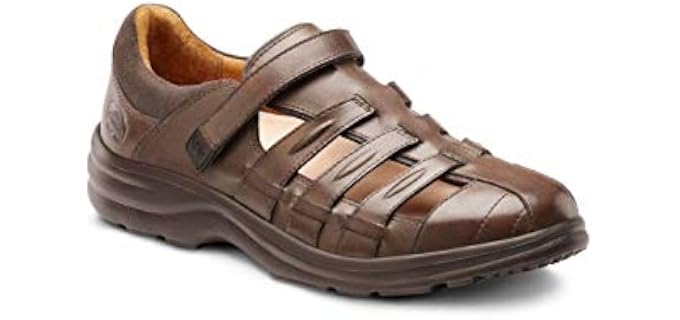 |
| Dr. Comfort |
| 10 | Propét® - Knit Walker With Roomy Toe Box | 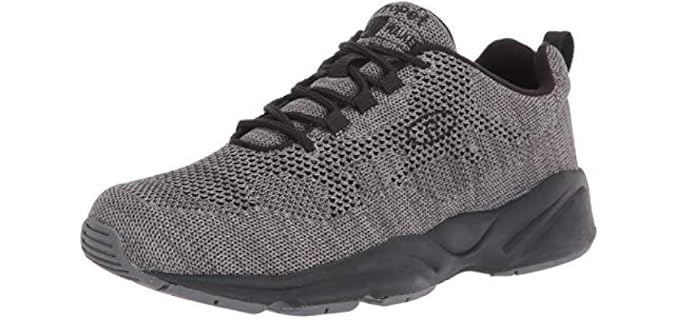 | 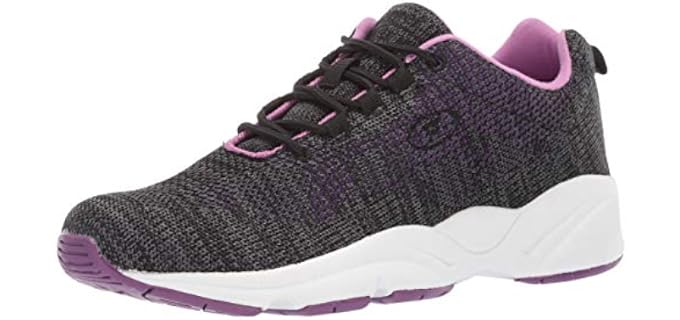 | Propét | |
| 11 | Propet® - Wide-Base Leather Walking Shoe | 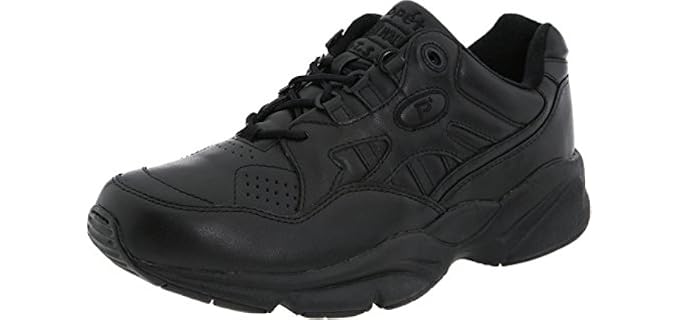 | 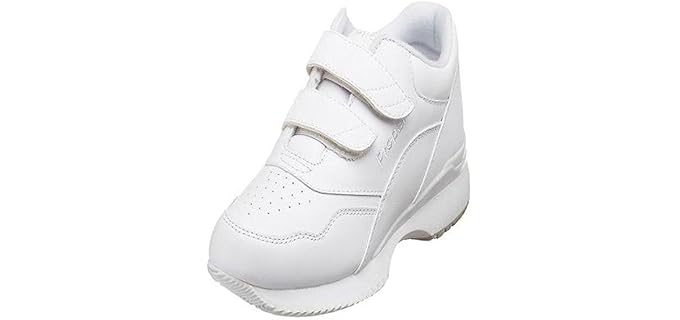 |
| Propet |
| 12 | Under Armour® - Cushioned Everyday Training Shoe | 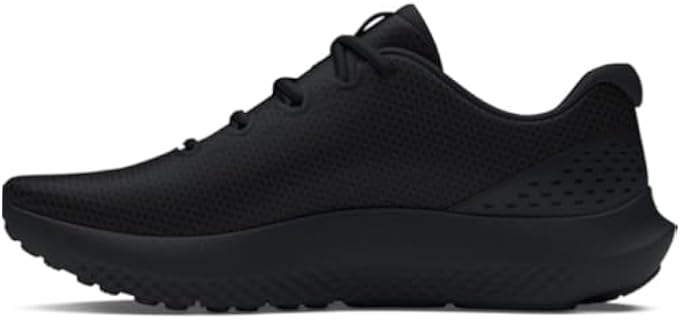 | 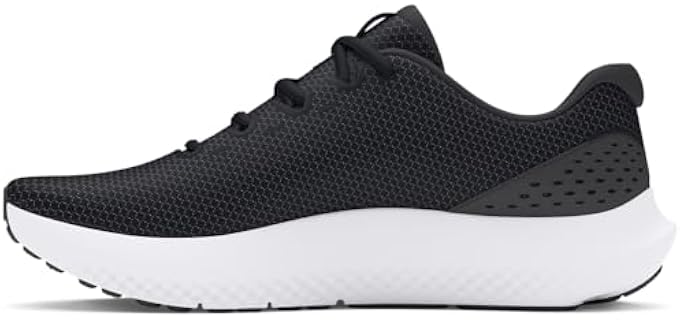 | Under Armour | |
| 13 | Propet® - Light Flexible Walking Shoe | TravelFit | 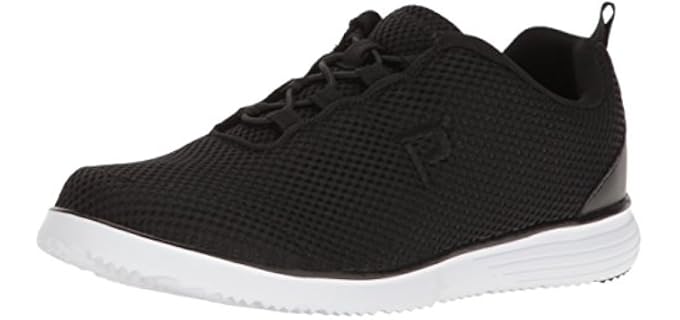 |
| Propet |
Sources
- National Institute of Diabetes and Digestive and Kidney Diseases (NIH). Diabetes & Foot Problems. Accessed October 26, 2026.
- Medicare.gov. Therapeutic shoes & inserts. Accessed October 26, 2026.
- Cleveland Clinic. Orthotics: Definition, Risks, Benefits, Types & Tips. Accessed October 26, 2026.
- American Academy of Orthopaedic Surgeons (OrthoInfo). Athletic Shoes. Accessed October 26, 2026.
Update History
- Oct 2026: Rewrote the shoe notes for all thirteen pairs, added a diabetes and Medicare section to the FAQ, corrected the Propét TravelFit men’s link and swapped the Soul Insole link to an in-stock listing, and replaced the sources
- Oct 2026: Replaced Vionic Walker with Vionic Colbie; replaced Dr. Comfort Stallion with Under Armour Charged+ Assert 11; replaced Timberland Titan with New Balance 608 V5; replaced Mephisto Match with Under Armour Charged Assert 10; replaced Orthofeet Sprint with adidas X_PLR Path; replaced Propet Life Walker with Propét Stability X Fly; replaced Orthofeet Lincoln Center with Under Armour Charged Surge 4
- Oct 2026: Removed Propet Commuterlite, Mephisto Paco, Dr. Scholls Monster, Propet Jonas, Orthofeet Lava and Dr. Comfort Winner (unavailable)
- Oct 2026: Added a Key Specs table and a Sources section; checked availability of every product
- Sep 2014: Published