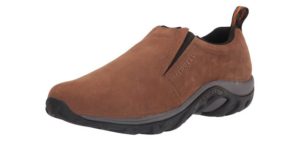
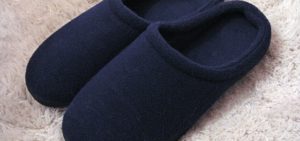
This guide explains why feet get wider, what tight shoes can do to them and how to pick a shoe that fits. It then lists nine wide-width shoes for men and women that are in stock on the web US.

Wide shoe basics
- Pressure on the sides of your foot or on your toes can mean you need a wider shoe, not a longer one.
- Leave at least a half inch between your longest toe and the tip of the shoe, and make sure the toe box lets you wiggle your toes.[3]
- OrthoInfo says bunions are widely attributed to wearing shoes that are too tight, although genetics also play a role. A shoe with a wider toe box is the first step it lists.[1]
- Try shoes on at the end of the day, when your feet are largest, in the socks you plan to wear.[3]
- Widths vary by brand. Check the maker’s size chart for each pair before you order.
Why Your Feet Grow Wider and Longer
Almost everyone needs a bigger or wider shoe at some point as they get older. Over the years the arch slowly flattens, so the foot lengthens, and the front of the foot spreads out and becomes wider.
Other things that make feet larger and wider:
- Weight Gain – Extra weight flattens the arch, and extra tissue around the foot adds to its width.
- Pregnancy – Hormones loosen the ligaments throughout the body, including those in the feet, and the extra weight adds load. The arches often drop, and the foot lengthens and widens.
Keeping Your Shoes Matched to Your Feet
You may not be able to stop your feet from changing, but you can keep your shoes in step with them.
- Measure your feet every time you buy shoes, in both length and width. Your size can change over the years, and a shoe that is too small makes things worse.[2]
- Choose shoes with arch support that follows the shape of your arch. Wear a supportive slipper or sandal at home, since hard floors like hardwood and concrete add to the strain.
- Pick shoes that stay stable and do not twist or flex too easily.
- Ask a podiatrist about prefabricated or custom orthotics if your arches are flattening. A pair that hugs the arch closely works best.
- Keep a healthy weight, since less load on your feet helps your arches hold their shape.
Problems Linked to Narrow Shoes
Shoes that squeeze the front of the foot cause discomfort and, over time, can change how your foot sits and moves. OrthoInfo says shoes that are too tight, too loose or without enough support can put unwanted stress on the feet, ankles, lower legs, hips and spine.[2] People with diabetes need extra care. Nerve damage can hide irritation from them, and a tight shoe can lead to blisters or sores that quickly turn into serious infections.[1]
How to Find the Right Wide Shoe
If your feet hurt even in a larger size, the problem may be width rather than length. Pressure on the big toe, the little toe or the sides of the foot is the usual sign. Do not buy a tight shoe and hope it stretches. It will only hurt more. OrthoInfo does list a ball-and-ring shoe stretcher as a first step for a shoe that presses on one spot, but a shoe that fits from the start is better.[1]
Many shoes now come in wider widths, so the choices are wide. Widths run from narrow through medium to wide and extra wide. The toe box, the front area of the shoe, should have ample room, and your toes should never feel cramped.[3]
Foot Conditions Linked to Narrow Shoes
According to OrthoInfo, shoes that squeeze the toes can contribute to these conditions.[1]
- Corns – A corn is a type of callus that forms when a tight shoe puts constant pressure on the skin. Some corns form between the toes, where they rub together.[1]
- Bunions – A bunion is a bony bump at the base of the big toe, which may turn in toward the second toe and cause swelling and pain in a shoe. Genes can play a role, but OrthoInfo says most are widely attributed to tight shoes.[1] The NHS advises wearing wide shoes with a low heel and a soft sole, and seeing a GP if the pain does not improve after a few weeks.[4] See our guide to walking shoes for bunions.
- Hammer Toe – The toe curls instead of lying flat and the middle joint bends upward. The top of the joint rubs on the shoe, and a corn often forms there.[1]
- Ingrown Toenail – This usually happens on the big toe when the nail is cut too short. A shoe that is too tight in the toe box presses the big toe against the second and adds to the pressure on the nail.[1]
- Crossover Toe – The toes are crimped in a toe box that is too small, and constant pressure moves the second or third toe over its neighbor.[1]
OrthoInfo’s first-line advice for all of these is a shoe with a wider toe box.[1] Shoes made from soft, breathable materials with good cushioning suit most wide feet. Match the support to your foot and the way you stand and move.
What a Good Wide Shoe Has
- Fit – Comfortable with room in the toe box, no squeezing and no sliding. A loose shoe can cause chafing and blisters. Leave about a half inch in front of your longest toe.[3]
- Toe Box – A roomy toe box with soft or flexible uppers.
- Heel – A heel counter that grips your heel so the foot does not slide.[3]
- Comfort – A supportive, cushioned insole and breathable, moisture-wicking materials.
- Outsole – A durable outsole with reliable grip.
Standard Shoes Width Chart
Every brand uses its own width sizes, so there is no true standard. This chart comes from the web and shows how the common letter codes line up. Check the size chart for each shoe, because sizes can differ.
| X-Narrow | Narrow | Medium | Wide | X-Wide | XX-Wide |
|---|---|---|---|---|---|
| 2A | B | D | 2E | 3E,4E | 6E |
Pick your size first, then your width, which is marked with a code from 2E up to 6E.
How We Chose These Shoes
We do not test shoes ourselves. We compared each model’s width options, toe room and cushioning using the makers’ descriptions and The web product pages, and we kept only pairs that are in stock on the web US. Brands do not pay to be included, but we may earn a commission from purchases.
Frequently Asked Questions (FAQ) About Wide Width Shoes
- How do I know if I need a wide shoe?
Pain or pressure on the sides of your foot, a bulge over the edge of the insole or cramped toes are common signs. OrthoInfo says your toes should never feel cramped and the toe box should let you wiggle them.[3] - What do 2E, 4E and 6E mean?
They are width codes. On the The web chart above, 2E is wide, 3E and 4E are extra wide and 6E is XX-wide. Brands differ, so check each shoe’s size chart. - Can tight shoes cause bunions?
OrthoInfo says most bunions are widely attributed to wearing shoes that are too tight, and that genetics can also play a role.[1] - Do shoes stretch to fit a wide foot?
Do not rely on it. OrthoInfo lists a ball-and-ring shoe stretcher as a way to ease a pressure point, but a shoe that fits from the start is better.[1] - When should I see a doctor?
See a GP or podiatrist if a bunion is getting worse, the pain has not improved after a few weeks of home care, or you have diabetes and any foot problem.[4]
Key Specs
| No. | Shoe | Type | Closure | Width options | Drop / Cushion | Weight |
|---|---|---|---|---|---|---|
| 1 | Asics Cumulus 28 | Running | – | Medium, Wide, X-Wide | FF BLAST MAX | – |
| 2 | New Balance M1540v3 / W1540v3 (women's) | Running | – | Medium, Wide, X-Wide | – | – |
| 3 | Vionic Walk Strider Knit | Walking | – | Medium, Wide | – | – |
| 4 | New Balance MW928v3 / WW928v3 (women's) | Walking | Lace-up | Medium, Wide, X-Wide | ABZORB | – |
| 5 | Under Armour Charged+ Assert 11 | Shoe | Lace-up | Medium, Wide, X-Wide | – | 10.2 oz |
| 6 | Mt. Emey 801 / 9106 (women's) | Dress/casual | – | Medium, Wide, X-Wide | – | – |
| 7 | New Balance 608 V5 | Casual sneaker | – | Medium, Wide, X-Wide | ABZORB | – |
| 8 | New Balance 577 V1 | Walking | Lace-up | Medium, Wide, X-Wide | ABZORB | – |
| 9 | Under Armour Charged Assert 10 | Shoe | – | Medium, Wide, X-Wide | 10 mm drop / Charged Cushioning | 9.5 oz |
– = not stated by the maker. Specs as stated by the maker, not tested by us.
Running Shoes for Wide Feet
These two running shoes come in men’s and women’s versions, and both are in stock on the web US. We may earn a commission if you buy through the links on this page, at no extra cost to you.
1Neutral Cushioned Daily Trainer
Asics Cumulus 28 - Men


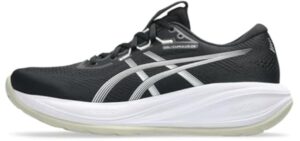
Asics Cumulus 28 - Women


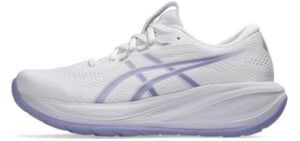
- FF Blast Max foam and rearfoot PureGEL cushion each landing and return energy at toe-off.
- The engineered mesh upper is light and breathable, and the Fluidride outsole blends EVA and rubber for traction without extra weight.
- An OrthoLite X-30 sockliner cushions and manages moisture, and reflective details help you stay visible in low light.
2
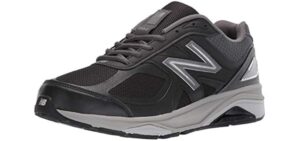
Motion Control Running Shoe
New Balance M1540v3 - Men


New Balance W1540v3 - Women


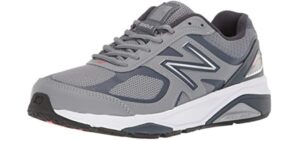
- An Encap midsole combines light foam with a polyurethane rim for support and impact absorption.
- A Rollbar stability post controls rear-foot motion for a steadier stride.
- The mesh and synthetic upper is breathable. New Balance has stopped making the 1540v3 in the US, so stock is limited.
Walking Shoes for Wide Feet
3Arch Support Walking Sneaker
Vionic Walk Strider Knit - Men


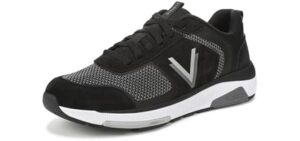
Vionic Walk Strider Knit - Women


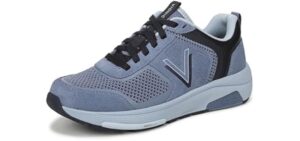
- The Vio Motion footbed has contoured arch support, shock-absorbing cushioning, a deep heel cup and forefoot flexibility.
- The knit upper is soft and breathable.
- Anti-roll and lateral rigidity features add stability, and the forefoot flexes for walking.
4
Motion Control Walking Shoe
New Balance MW928v3 - Men


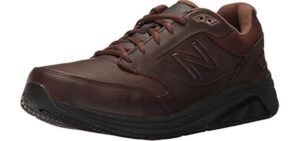
New Balance WW928v3 - Women


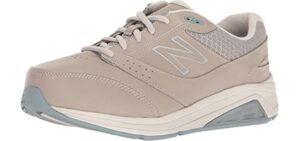
- Motion control design and a Rollbar stability post reinforce the inside and outside of the midsole to limit rear-foot movement.
- Abzorb cushioning absorbs impact at the heel and forefoot.
- The leather upper holds its shape, and the shoe comes in medium, wide and extra-wide widths.
Dress and Casual Shoes for Wide Feet
5Neutral Trainer with Wide Options
Under Armour Charged+ Assert 11 - Men


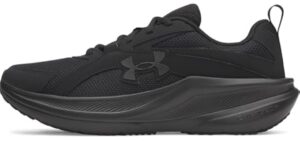
Under Armour Charged+ Assert 11 - Women


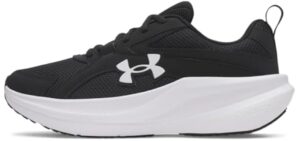
- The mesh upper has leather overlays that add midfoot support, and at least 30% of the upper is recycled content.
- Charged+ midsole cushioning is soft, and the rubber outsole has flex grooves for toe-off.
- It weighs about 10.2 oz and comes in medium, wide and extra-wide widths.
6
Extra-Depth Dress and Casual Shoe
Mt. Emey 801 - Men


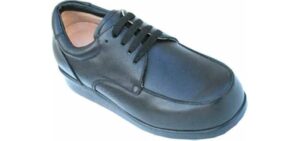
Mt. Emey 9106 - Women

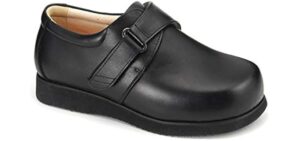
- Both models are sold as supra-depth shoes, which means extra room above the foot for thick socks, swelling or an orthotic insole.
- The men’s 801 is a dress and casual shoe sold in X-Wide, and the women’s 9106 is a strap shoe sold in 5E.
- The styling is a plain dress and casual look, so these work for work, church or family events.
7
Casual Cross Trainer, Wide Widths
New Balance 608 V5 - Men


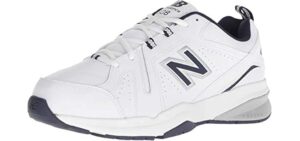
New Balance 608 V5 - Women


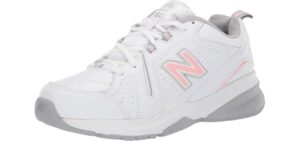
- An Abzorb heel crash pad absorbs impact, and a molded insert adds cushioning underfoot.
- The suede upper breaks in to your foot, and dual-density collar foam steadies the ankle.
- A Phantom Liner interior has few seams to rub, and the EVA midsole has an internal shank for midfoot stability.
More Wide Walking and Training Shoes
8Leather Lace-Up Walking Shoe
New Balance 577 V1 - Men


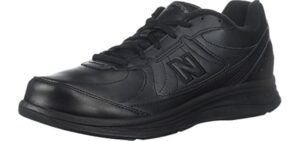
New Balance 577 V1 - Women


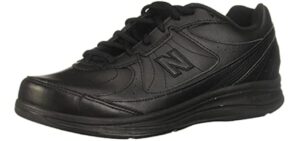
- The full-grain leather upper keeps its shape.
- Abzorb cushioning in the midsole absorbs impact, and the Walking Strike Path outsole guides a natural heel-to-toe stride.
- It comes in several widths.
9
Light Everyday Trainer
Under Armour Charged Assert 10 - Men


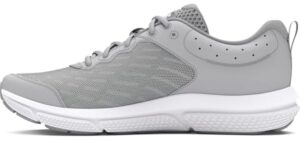
Under Armour Charged Assert 10 - Women


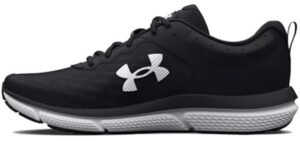
- The breathable mesh upper has synthetic overlays for durability and support.
- An EVA sockliner adds soft step-in comfort, and the Charged Cushioning midsole uses compression-molded foam.
- The solid rubber outsole covers high-wear zones, the offset is 10 mm and the shoe weighs about 9.5 oz.
Summary Table of Wide Width Shoes
| No. | Shoe | Men ♂ | Women ♀ | Features | Brand |
|---|---|---|---|---|---|
| 1 | Asics® - Neutral Cushioned Daily Trainer | 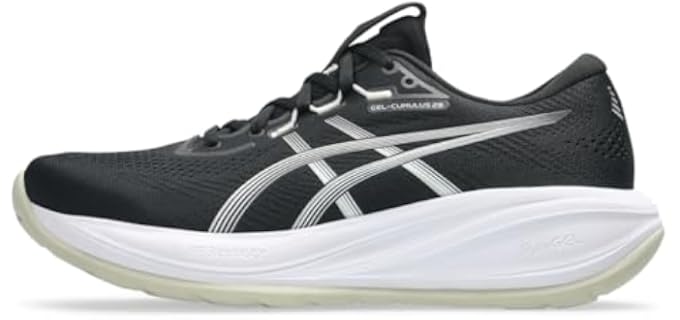 | 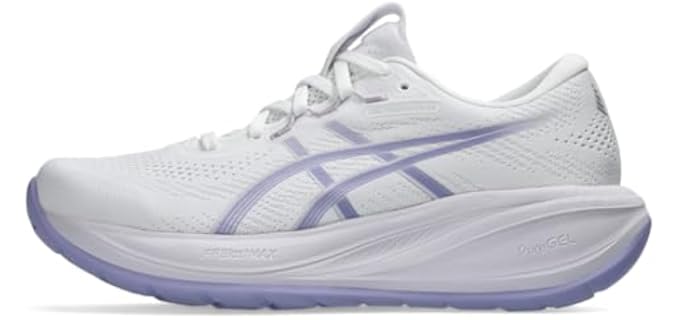 |
| Asics |
| 2 | New Balance® - Motion Control Running Shoe | 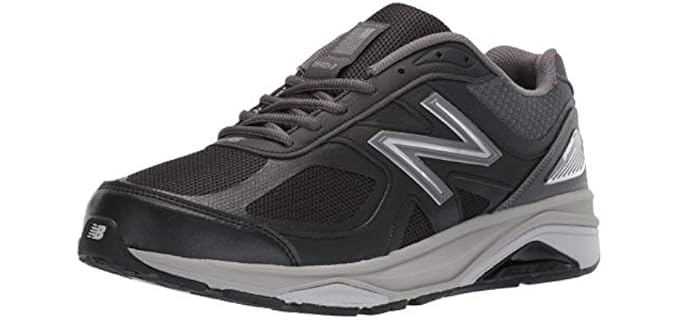 | 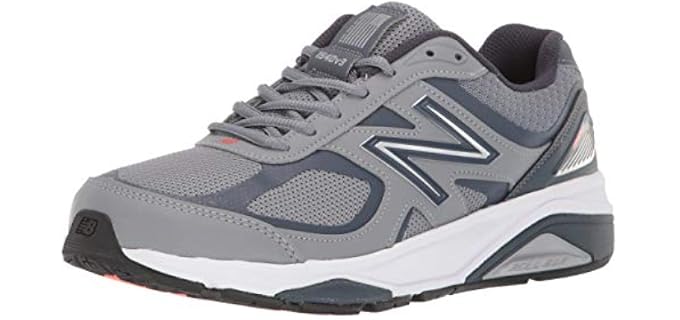 |
| New Balance |
| 3 | Vionic® - Arch Support Walking Sneaker | 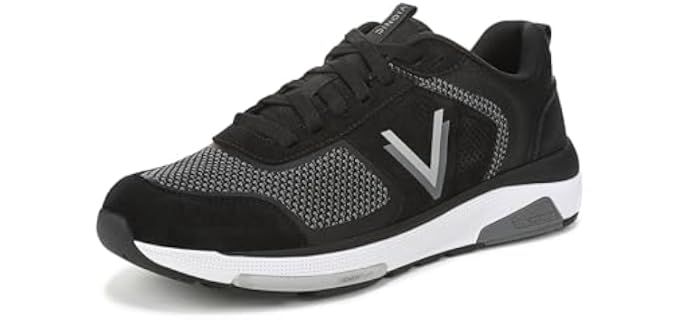 | 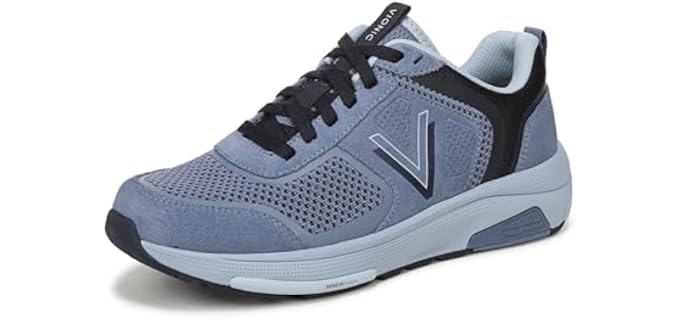 |
| Vionic |
| 4 | New Balance® - Motion Control Walking Shoe | 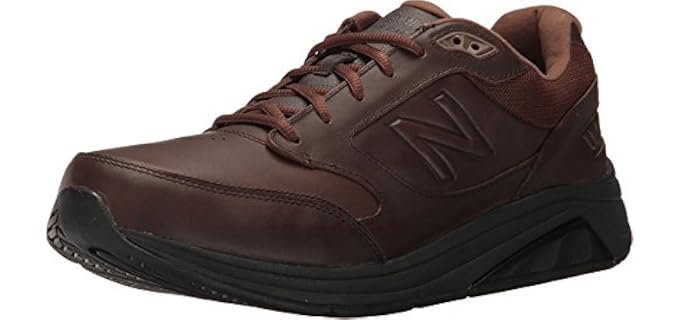 | 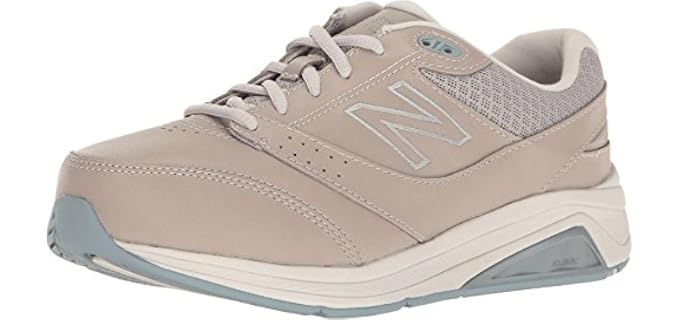 |
| New Balance |
| 5 | Under Armour® - Neutral Trainer with Wide Options | 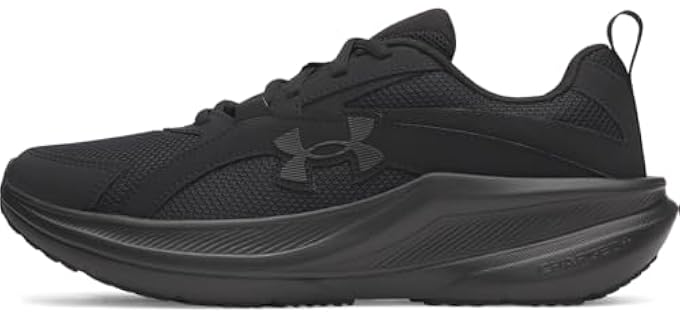 | 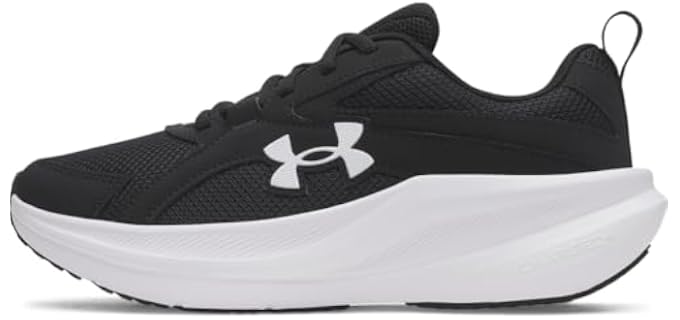 |
| Under Armour |
| 6 | Mt. Emey® - Extra-Depth Dress and Casual Shoe | 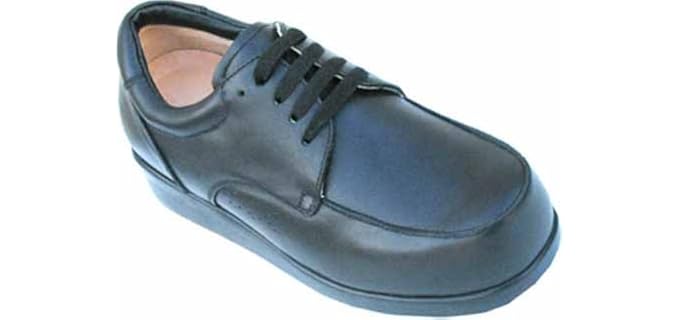 | 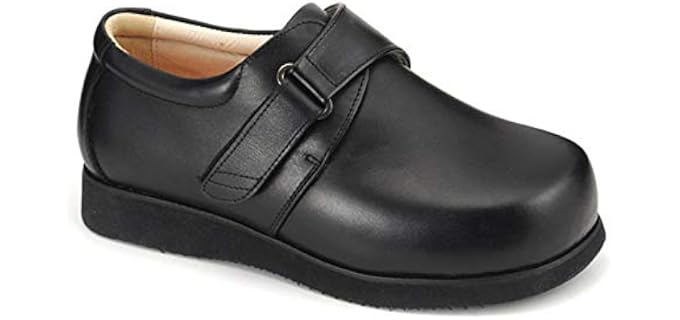 |
| Mt. Emey |
| 7 | New Balance® - Casual Cross Trainer, Wide Widths | 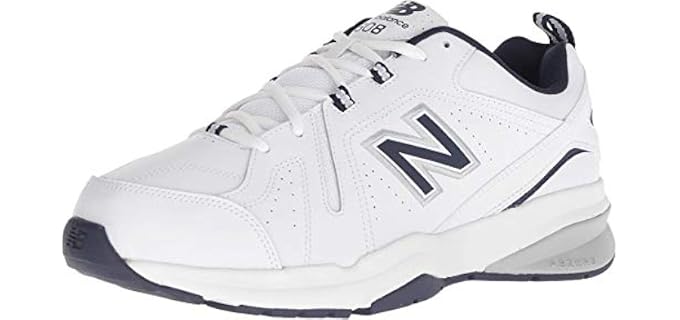 | 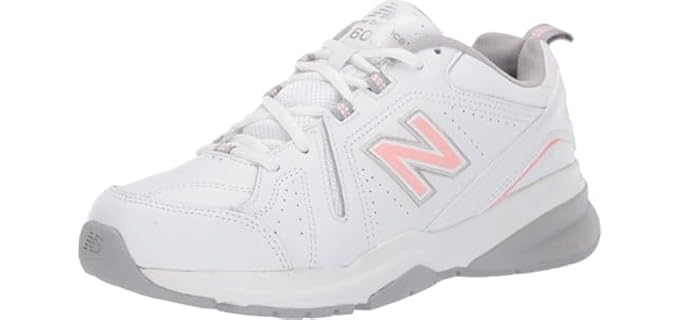 |
| New Balance |
| 8 | New Balance® - Leather Lace-Up Walking Shoe | 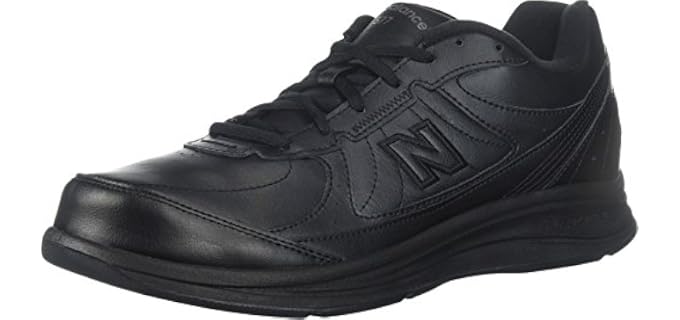 | 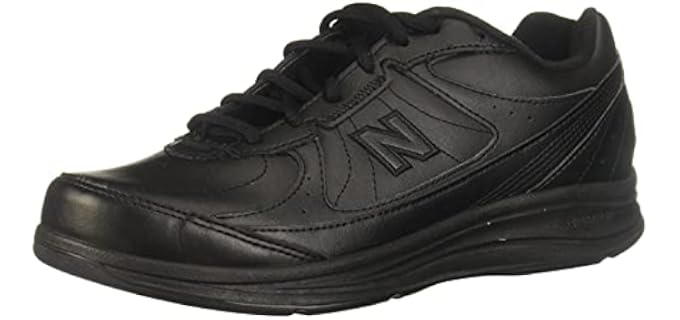 |
| New Balance |
| 9 | Under Armour® - Light Everyday Trainer | 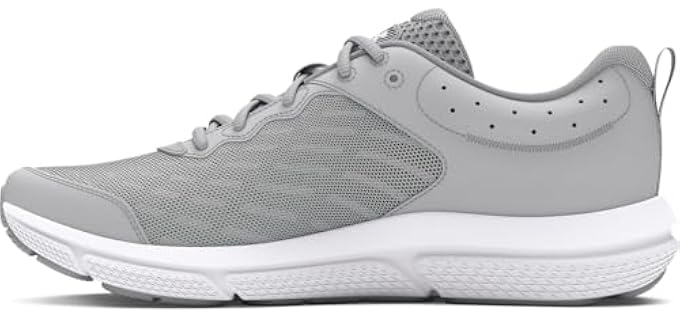 | 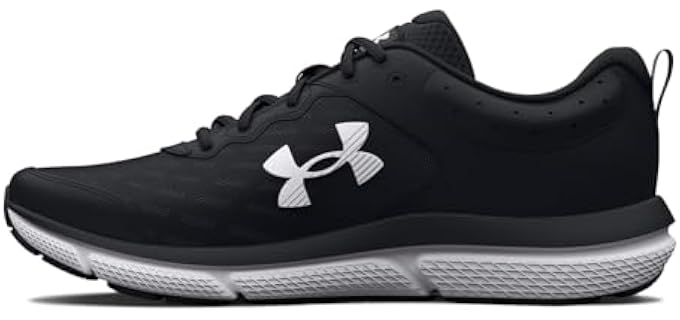 |
| Under Armour |
Sources
- American Academy of Orthopaedic Surgeons (OrthoInfo). Tight Shoes and Foot Problems. Accessed October 26, 2026.
- American Academy of Orthopaedic Surgeons (OrthoInfo). Shoes: Finding the Right Fit. Accessed October 26, 2026.
- American Academy of Orthopaedic Surgeons (OrthoInfo). Athletic Shoes. Accessed October 26, 2026.
- National Health Service (NHS). Bunions. Accessed October 26, 2026.
Update History
- Oct 2026: Rewrote the article around OrthoInfo and NHS guidance on tight shoes and wide feet, regrouped the shoes under correct headings and corrected the labels for the Mt. Emey, New Balance 608 V5 and Under Armour Assert shoes
- Oct 2026: Updated Asics Cumulus 24 to Cumulus 28; replaced Vionic Walker with Vionic Walk Strider Knit; replaced Dr. Comfort Stallion with Under Armour Charged+ Assert 11; replaced Dansko Pro with New Balance 608 V5; replaced New Balance MW1300v1 with New Balance 577 V1; replaced FootFitter Beech Wood with Under Armour Charged Assert 10
- Oct 2026: Removed Clarks Unstructured Un.Bend and Rockport World Tour (unavailable)
- Oct 2026: Added a Key Specs table and a Sources section; checked availability of every product
- Mar 2015: Published