Volleyball asks a lot of your feet: quick starts and stops, jumps, and side-to-side moves. A shoe built for the sport gives you lateral support, grip and cushioning that a running or walking shoe does not.[2]
This guide explains what makes a volleyball shoe different and compares seven pairs for men and women.

Volleyball shoe basics
- If you play a sport more than two to three times a week, wear a sport-specific shoe.[1][3]
- A volleyball shoe should be light, give lateral support and have a flat herringbone or deep-ripple rubber sole.[2]
- Volleyball shoes are low-cut, which suits lunging and diving, and the lateral ankle sprain is the most common injury in volleyball.[4]
- Ankle braces can improve stability, and rehabilitation exercise is the best way to prevent sprains.[4]
What Makes Volleyball Shoes Special?
Court shoes include shoes made for basketball, tennis and volleyball. They have a solid tread, not the tread of a running shoe.[3] A volleyball shoe needs to handle jumps, sudden stops and lateral cuts, usually on a wood court.[2]
- Fit – A snug fit that does not rub or pinch, so your foot does not slide inside the shoe.
- Weight – A light shoe so it does not hold you back. APMA notes that volleyball shoes are lighter and have less midsole support than basketball shoes, with a sole that responds to quick starts and stops.[1]
- Cushioning – Good cushioning, especially under the forefoot, absorbs the impact of repeated landings.[2]
- Upper – A mesh or perforated upper lets air in as your feet heat up.[2]
- Heel and Toe – A firm heel counter and toe-drag protection add control.[2]
- Outsole – Gum rubber is the most common outsole material, and a flat herringbone or deep-ripple tread grips a wood court.[2][4]
Volleyball Shoes vs Basketball Shoes
Volleyball shoes may look like basketball shoes, but they are built differently. Basketball shoes often have high ankle construction for support when you change direction, while volleyball shoes are lighter and have a sole that responds to quick starts and stops.[1] Volleyball shoes are low-cut, which makes lunging and diving easier.[4]
Protecting Your Ankles
The lateral ankle sprain is the most common injury in volleyball and basketball. Physical therapy and rehabilitation exercise, especially balance training, are the best way to prevent and manage it. Ankle braces have been shown to improve ankle stability and reduce inversion sprains without hurting performance.[4] Shoes with good lateral support help, but they are only part of the answer.[2]
How We Chose These Shoes
We do not test shoes ourselves. We compare each model’s lateral support, cushioning, traction and fit using The web and the makers’ product details, and we only list shoes sold on the web in the US. Brands do not pay to be included, but we may earn a commission from purchases.
Key Specs
| No. | Shoe | Type | Closure | Width options | Drop / Cushion | Weight |
|---|---|---|---|---|---|---|
| 1 | Asics Sky Elite FF 4 | Volleyball | – | Medium | FF Blast Max | – |
| 2 | Asics Gel-Tactic 13 | Volleyball | – | Medium | GEL technology | – |
| 3 | Mizuno Wave Momentum 4 Elite | Volleyball | – | Medium, Wide | Mizuno Wave | – |
| 4 | Mizuno Wave Lightning Neo 3 | Volleyball | – | Medium | Enerzy NXT | – |
| 5 | ASICS Upcourt 6 | Volleyball | – | Medium, Wide | – | – |
| 6 | adidas Ligra 8 Indoor | Volleyball | – | Medium | – | – |
| 7 | Under Armour Charged+ Assert 11 | Running | Lace-up | Medium, Wide, X-Wide | – | 10.2 oz |
– = not stated by the maker. Specs as stated by the maker, not tested by us.
Our Picks for Volleyball
These pairs are made for the court, plus one trainer for off-court days. If you buy through the links on this page, we may earn a commission at no extra cost to you.
1
Max-Cushion Court Shoe
Asics Sky Elite FF 4 - Men
Asics Sky Elite FF 4 - Women
- FF Blast Max foam is energetic and soft, and the thick midsole adds cushioning for landings.
- RiseTruss technology supports take-offs and changes of direction.
- DynaLacing wraps the forefoot for stable push-offs and lateral moves, and the curved heel shape helps you cut in smoothly.
2
Stability Court Shoe, Gel Cushioning
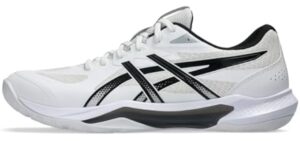
Asics Gel-Tactic 13 - Men


Asics Gel-Tactic 13 - Women


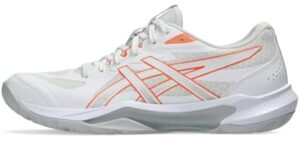
- The no-sew, film-covered mesh upper has a smooth interior.
- StableTruss technology adds stability in lateral movements.
- GEL cushioning softens landings, and circular outsole patterns improve traction.
3
Wave Plate Court Shoe
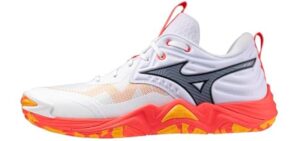
Mizuno Wave Momentum 4 Elite - Men


Mizuno Wave Momentum 4 Elite - Women


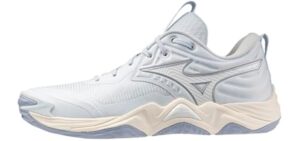
- The Wave plate spreads impact over a wider area, which gives a stable, cushioned platform.
- Enerzy foam is soft and resilient, and the DynamotionFit bootie construction fits snugly.
- XG rubber grips the floor, and Dura Shield protects the toe from friction.
4
Light Energy-Return Court Shoe
Mizuno Wave Lightning Neo 3 - Men
Mizuno Wave Lightning Neo 3 - Women
- Enerzy NXT foam is made for energy return and cushioning, and Pownce is a very light midsole material.
- XG rubber gives high traction on the floor, and Dura Shield protects the toe.
- A strobel lasting board keeps the underfoot feel comfortable.
5
Light Flexible Court Shoe
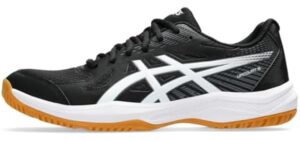
ASICS Upcourt 6 - Men


ASICS Upcourt 6 - Women


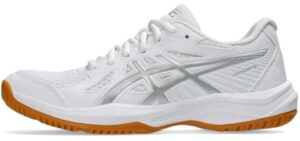
- Breathable mesh underlays keep air moving.
- The light design is flexible and comfortable.
- It runs small, so consider sizing up.
6
adidas Indoor Court Shoe
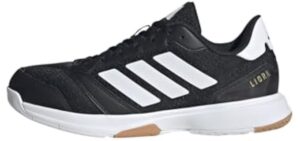
adidas Ligra 8 Indoor - Men


adidas Ligra 8 Indoor - Women


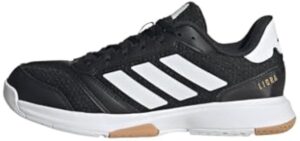
- It is built for indoor courts and comes in a medium width.
7
Neutral Cross-Training Shoe
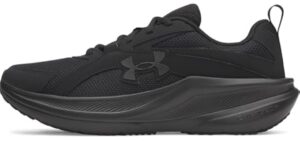
Under Armour Charged+ Assert 11 - Men


Under Armour Charged+ Assert 11 - Women


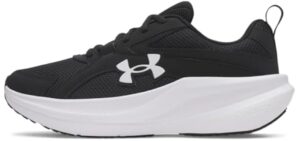
- The mesh upper has leather overlays for midfoot support.
- Charged+ midsole cushioning gives a soft ride, and flex grooves in the rubber outsole help at toe-off.
- A running-style tread can be hard to use on a court, so keep this pair for off-court days.[3]
Index Table: Shoes for Volleyball Compared
| No. | Shoe | Men ♂ | Women ♀ | Features | Brand |
|---|---|---|---|---|---|
| 1 | Asics® - Max-Cushion Court Shoe | Sky Elite FF 4 | Sky Elite FF 4 | Asics | |
| 2 | Asics® - Stability Court Shoe, Gel Cushioning | 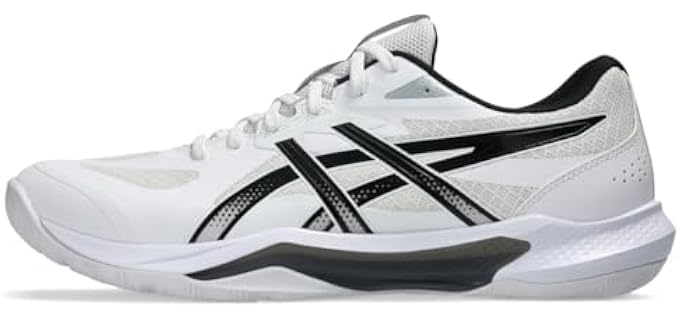 | 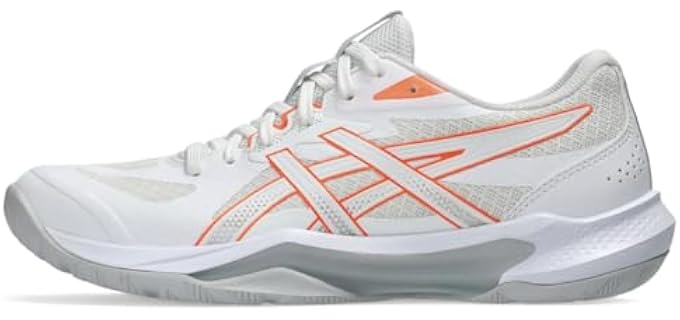 |
| Asics |
| 3 | Mizuno® - Wave Plate Court Shoe | 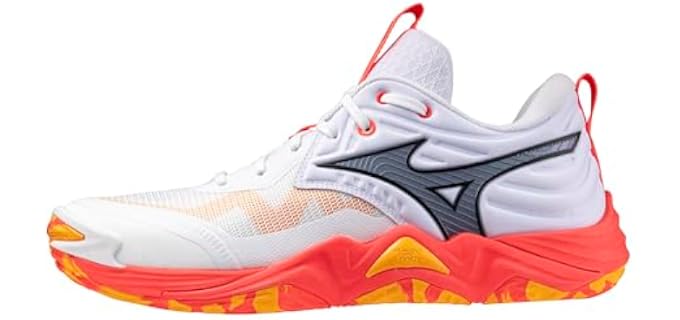 | 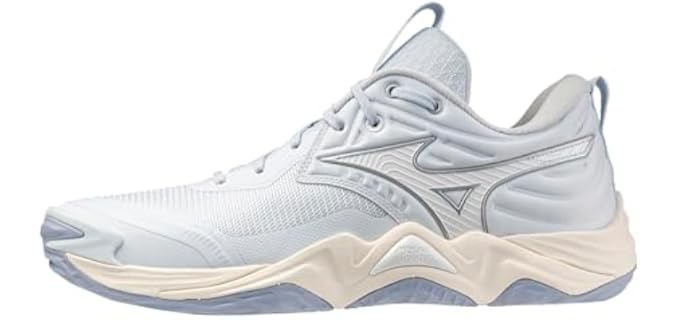 | Mizuno | |
| 4 | Mizuno® - Light Energy-Return Court Shoe | Wave Lightning Neo 3 | Wave Lightning Neo 3 | Mizuno | |
| 5 | ASICS® - Light Flexible Court Shoe | 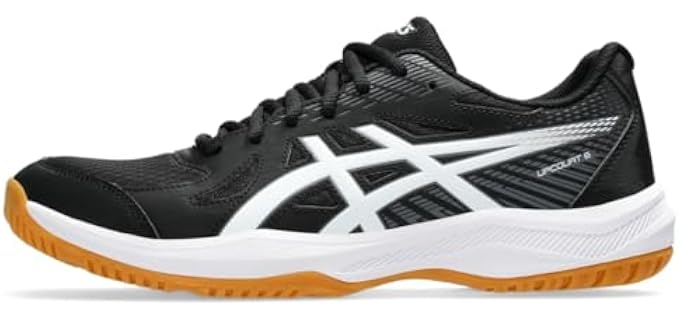 | 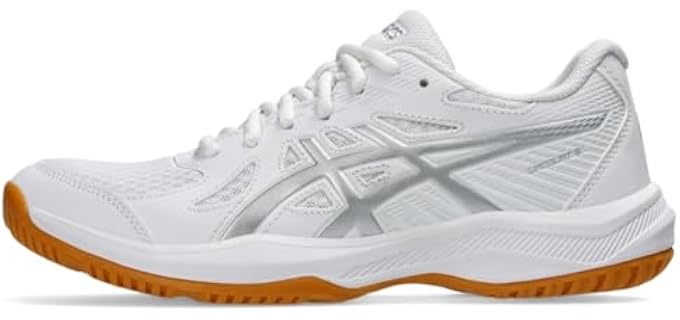 | ASICS | |
| 6 | adidas® - adidas Indoor Court Shoe | 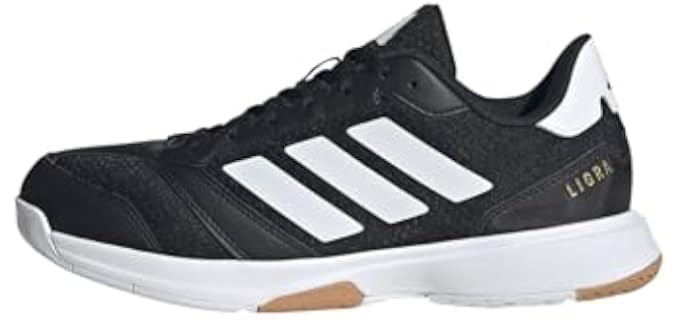 | 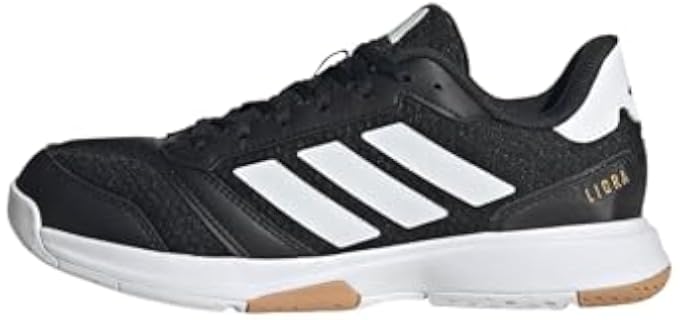 | adidas | |
| 7 | Under Armour® - Neutral Cross-Training Shoe | 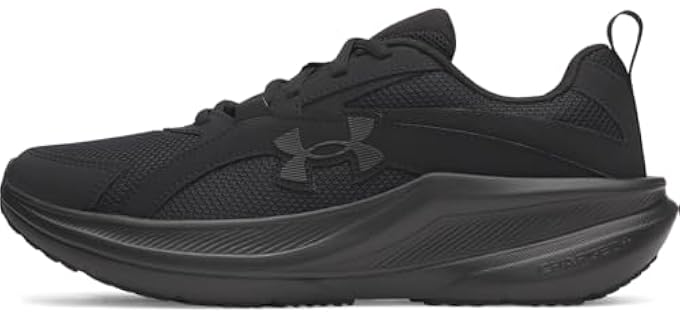 | 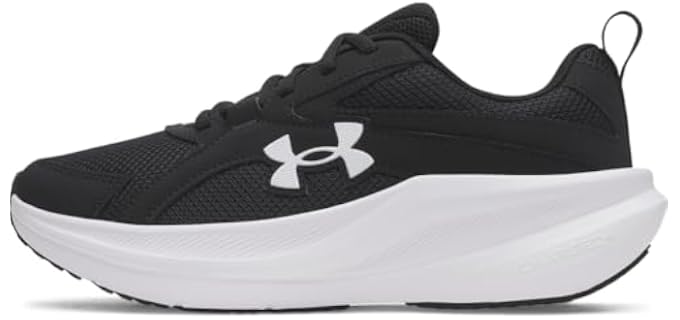 | Under Armour |
Sources
- American Podiatric Medical Association. Choosing Shoes for Sports. Accessed October 26, 2026.
- Porter and Schon, Baxter’s The Foot and Ankle in Sport (2nd ed.). The shoe in sports. Accessed October 26, 2026.
- American Academy of Orthopaedic Surgeons (OrthoInfo). Athletic Shoes. Accessed October 26, 2026.
- Musculoskeletal Key. Basketball and Volleyball. Accessed October 26, 2026.
Update History
- Oct 2026: Rewrote the shoe notes for all pairs, added the Asics Sky Elite FF 4 and Mizuno Wave Lightning Neo 3, relabeled the Under Armour Charged+ Assert 11 as an off-court trainer, and replaced the sources
- Oct 2026: Removed Nike Air Zoom Pegasus 42 (unavailable)
- Oct 2026: Added a Key Specs table and a Sources section; checked availability of every product
- May 2020: Published


