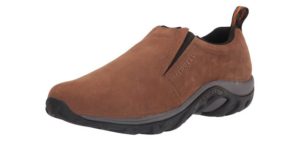
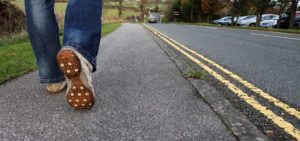
Icy floors pose a serious slip-and-fall risk, making awareness of these hazards essential for safety and injury prevention.
Choosing slip-resistant shoes with their specially designed tread and outsole is vital for safety, helping you stay confident and in control.

Slippery and Icy Surfaces
Spilling water or any liquid on a tiled, plastic, or even concrete floor immediately makes it extremely slippery and dangerous. Even a smooth, hard floor can be slick if you wear shoes with no-slip resistance.
It’s crucial to understand that an icy floor, whether it’s concrete, pavement, or tile, is among the most dangerous surfaces you can encounter. Recognizing this should help you feel more confident and motivated to take safety measures immediately.
However, if the need arises and you have to walk or stand on an icy surface, exercising caution and wearing specialized shoes can make the experience feel more manageable and help you feel more in control and secure.
Here are a few steps you can take to help you walk on an icy surface;
- Salt The Area – You have most likely read a few times that sprinkling salt on an ice surface can help to make it less slippery. This works because the salt melts the ice, creating a more liquid, safer, yet still slippery area for you to walk or stand on.
- Keep Your Balance – If you have to walk on a slippery and iced surface, try to keep perfect balance with every step you take. The slick, icy surface will challenge your balance, almost like ice skating for the first time, so you must balance before taking the next step.
- Slow and Easy – Slow and easy movement and walking on any ice or slippery surface is key. Move slowly and take every step securely. Never rush when the floors are slippery; this is the fastest and hardest you will fall!!!.
- Hold on For Dear Life – If there is something you can hold on to when walking on the ice, by all means, use it! This will help you keep your balance; if you fall, it can break the fall a bit.
What to Look for in a Shoe for Icy Surfaces
- Outsole – The first and most important shoe characteristic for icy pavements and iced or snow surfaces is to look for an ice and snow traction outsole. A Vibram Rubber outsole, for starters, offers the best grip and durability, but will need additional grip features, such as a molded lug tread, arctic grip technology, or gaiter hooks. Carbide Tip Studs on the outsole also increase traction on icy surfaces. An aero-track Vulcanized rubber outsole is likewise something you could look for with superior durability and high traction.
- Insulation – Insulation in cold weather conditions can help keep your feet from freezing and comfortable. Most likely, if you are walking on ice or iced pavements, it will be cold to very cold. There are many types of insulation. You can opt for Thinuskate insulation from about 200 grams and up if it is colder. Fleece- or sheep-wool-lined shoes will also provide excellent warmth and insulation.
- Stability and Support – Because icy surfaces are so slippery, they can play havoc on your balance, even when you properly grip your shoes. Stability features such as a contoured footbed and motion control or a heel cup are great for comfort and support, helping you keep your balance on slippery floors and pavements.
- Durability – Durability in shoes that need a good grip on wet and icy surfaces is a must. Good-quality materials that function properly are ideal, and robust construction is necessary.
- Waterproofing – Any good snow or ice boots and shoes will be waterproof. Ice melts and can cause wetness, which can cause irritation, infection, and even frostbite in cold conditions. Therefore, good waterproofing is necessary for shoes on wet or icy surfaces. Your most breathable and best waterproofing option is Gore-Tex, as it is breathable, durable, and completely waterproof; however, other waterproofing materials are similarly good, such as rubber and waterproof leather.
Features of a Good Shoe for Walking on Ice
- Waterproofing – A waterproof membrane – your best option is Gore-Tex.
- Outsole – A Rubber Outsole with a Tread for ice and icy pavements, such as a Vibram Arctic Grip Outsole or Molded Lug pattern. A stable chassis or features and a Contagrip outsole are needed. Molded Heel and Gaiter Hook for deeper snow. BUgrip outsole with Carbide Tip Studs.
- Insulation is – Insulation against the cold, such as Thinsulate or a fleece lining.
- Breathability – Breathable design to prevent sweating.
- Closure and Fit – Secure fit, lace-up, or Velcro straps.
- Cushioning – Underfoot cushioning for comfort and a shock-absorbing midsole.
Reviews: The Best Shoes for Walking on Ice and Icy Pavements
Rest assured, these shoes have been carefully selected for their excellent slip-resistant properties and characteristics for walking on icy surfaces. With these shoes, you can walk with confidence, knowing that you’ve made a safe and reliable choice.
1
Shoes for Walking on Ice and Icy Pavements


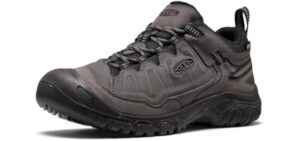


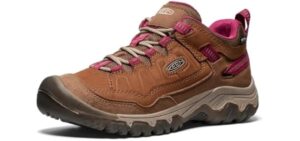
- A KEEN.DRY waterproof, breathable membrane is built in.
- KEEN lists its ALL-TERRAIN rubber outsole for traction on muddy and rocky ground.
- The removable Luftcell footbed has arch support, and the tongue and collar are padded.
- KEEN Original Fit gives the toes room to spread, and a rubber toe guard adds protection.
2
Extreme Cold Snow Boots for Walking on Ice


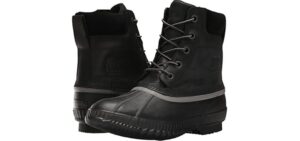


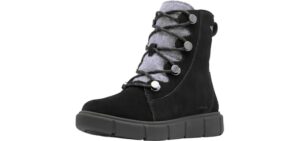
- The men’s Cheyanne II has a waterproof leather or nubuck upper, a vulcanized rubber shell and a herringbone outsole.
- Sorel lists 200 g of insulation in the Cheyanne II and rates it to -32 °C.
- The women’s Explorer III Joan has a waterproof suede upper and a microfleece lining.
- The Explorer III Joan has a lightweight EVA midsole and an EVA and rubber outsole.
3
Rubber Boots for Walking on Icy Pavements


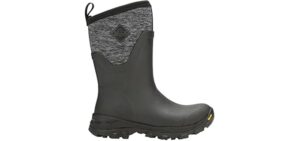
- Flexible and waterproof 3 mm neoprene uppers.
- An EVA contoured and cushioned molded midsole and thermal foam underfoot footbed.
- Insulated and completely waterproof.
- Features a slip-resistant, rugged molded lug rubber outsole.
4
Stylish Boots for Walking on Icy Pavements


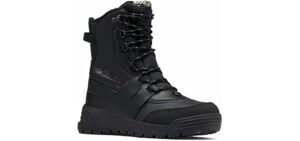


- Leather and textile uppers with waterproof seam-sealed construction.
- There are 200 grams of insulation for warmth and a comfortable Techlite midsole for cushioning.
- A slip-resistant Omni-Grip non-marking rubber outsole.
- It also features advanced waterproofing technology and thermo-heat-reflective technology inside that radiates heat towards your feet.
5
Insulated Waterproof Moc for Winter Walking


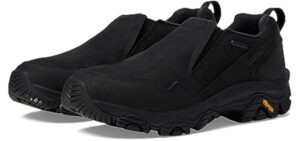


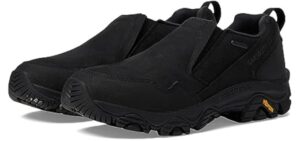
- It has a waterproof full-grain leather upper with a waterproof membrane.
- Merrell lists 208 g of synthetic insulation in the men’s pair and 256 g in the women’s pair.
- A thin SOLARCORE aerogel insole adds warmth underfoot.
- The lining is fleece and mesh, and the webbing is recycled.
6
Shoes for ice Pavements and Ice Walking


- The slip-on light design is easy to slip on and off.
- There are leather uppers and a comfortable cushioned insole.
- Elastic gore allows for easy on and off, and there is a fully waterproof lining.
- The rubber sole has a lug and slip-resistant design for wet and icy surfaces.
Index Table: Top Rated Shoes for Walking on Ice and Icy Pavements
| No. | Shoe | Men ♂ | Women ♀ | Features | Brand | Score |
|---|---|---|---|---|---|---|
| 1 | Keen® - Shoes for Walking on Ice and Icy Pavements | 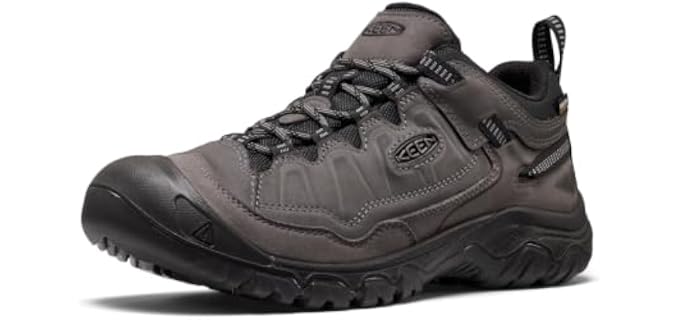 | 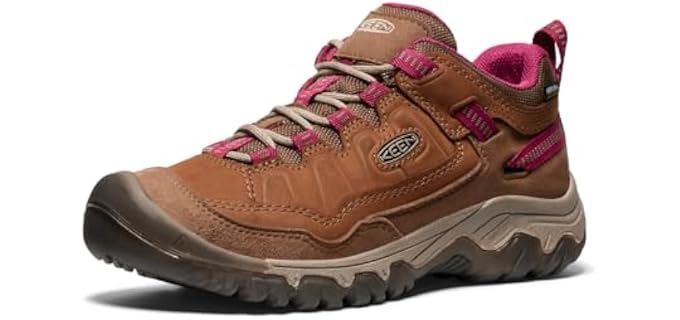 |
| Keen | - |
| 2 | Sorel® - Extreme Cold Snow Boots for Walking on Ice | 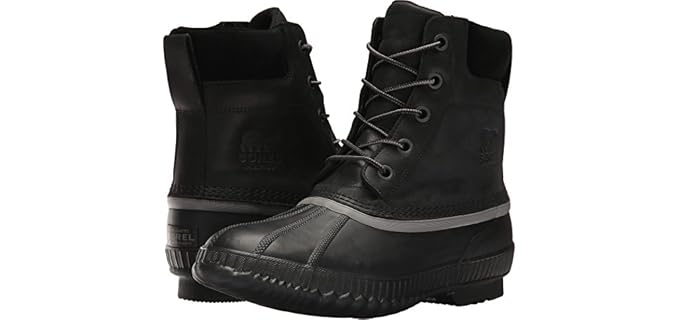 | 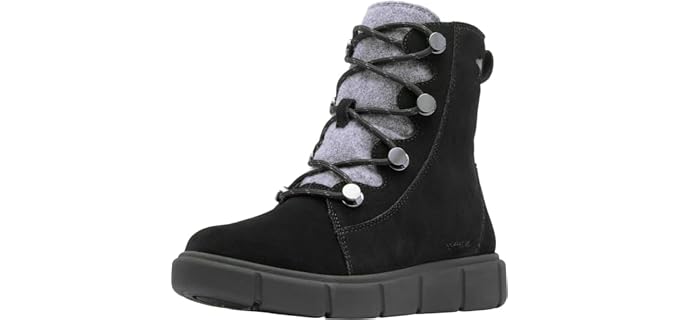 |
| Sorel | - |
| 3 | Muckboot® - Rubber Boots for Walking on Icy Pavements |  | 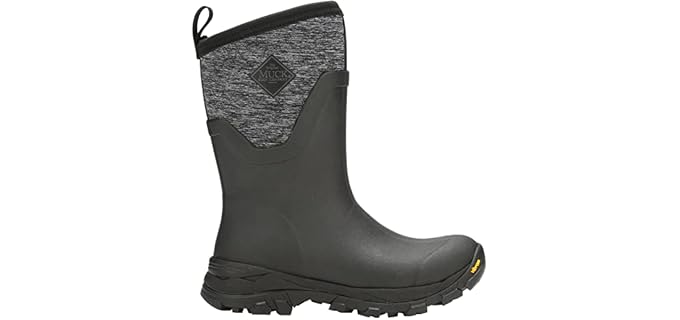 |
| Muckboot | 98 |
| 4 | Columbia® - Stylish Boots for Walking on Icy Pavements | 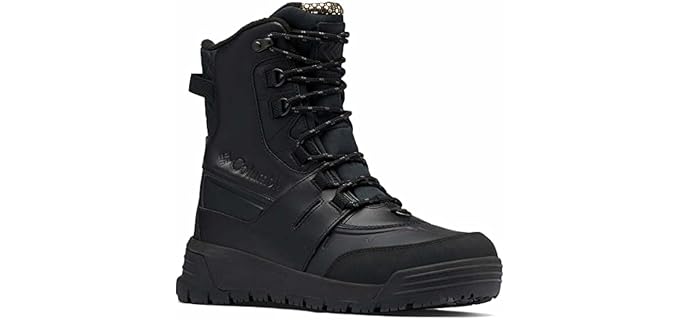 |  |
| Columbia | 98 |
| 5 | Merrell® - Insulated Waterproof Moc for Winter Walking | 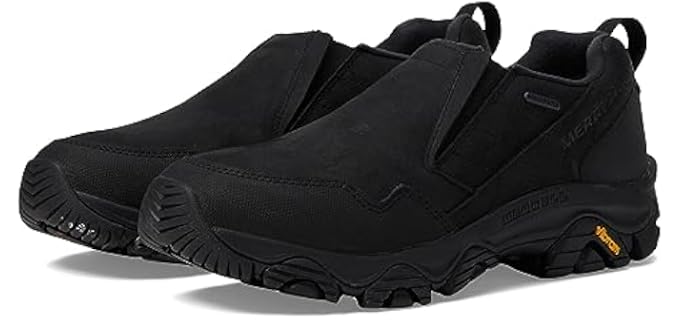 | 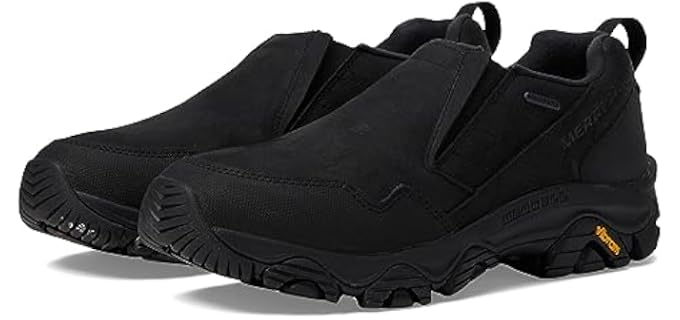 |
| Merrell | - |
| 6 | Merrell® - Shoes for ice Pavements and Ice Walking |  |  |
| Merrell | 97 |