Diabetes can damage the nerves and reduce blood flow in the feet. The NIDDK says that when you lose feeling in your feet, you may not notice a pebble in your sock or a blister, which can lead to cuts and sores that become infected.[1] Shoes matter more than usual, even the ones you wear to a wedding or the office.
The NIDDK recommends walking and athletic shoes for daily wear. If your job or an event calls for dress shoes, this guide covers what to look for and six pairs that are in stock on the web US.[1]

Diabetes and dress shoes
- Diabetes can cause nerve damage that makes you lose feeling in your feet, and it can lower blood flow so that sores and infections heal slowly.[1]
- The NIDDK says to wear shoes that fit well, feel good and have enough room for your toes, to buy them at the end of the day when your feet are largest, and to avoid pointed toes and high heels because they put too much pressure on your toes.[1]
- When you break in new shoes, wear them only a few hours at first and then check your feet for sore areas. Check inside your shoes for pebbles or rough lining before you put them on.[1]
- Call your provider right away about a cut, blister or bruise that has not started to heal after a few days, or skin that turns red, warm or painful.[1]
How Diabetes Affects Your Feet
Over time, diabetes may cause nerve damage, called diabetic neuropathy, with tingling, pain and loss of feeling in the feet.[1] In the UK, diabetes is the most common cause of peripheral neuropathy, and the NHS lists loss of balance as one of its symptoms.[2]
Diabetes can also lower the blood flow to your feet, which makes it hard for a sore or infection to heal. In bad cases, infections can lead to gangrene and amputation, which is why the NIDDK says good foot care is very important.[1] Rarely, nerve damage changes the shape of the foot, as in Charcot’s foot, and then you may need special shoes or inserts.[1]
Choosing Dress Shoes
The goal is to protect the foot from rubbing and pressure. A dress shoe does that only if it fits well.
- Room for Your Toes – The NIDDK says to choose shoes that feel good with enough room for your toes. Skip pointed toes.[1]
- Smooth Interior – Seams or rough spots rub, and you may not feel it. Check the lining by hand before each wear, and wear clean, lightly padded socks with no seams.[1]
- Cushioning – A cushioned footbed and shock-absorbing sole soften each step. A removable footbed lets you use an orthotic if your doctor prescribes one.[1]
- No High Heels – The NIDDK says high heels put too much pressure on the toes. Choose a low, stable heel.[1]
- Materials That Breathe – The NIDDK says not to wear vinyl or plastic shoes because they do not stretch or breathe. Leather and textile linings are better choices.[1]
Features of a Good Dress Shoe for Diabetics

- Upper – Soft leather or smooth leather, with no rough stitching inside.
- Fit – A roomy toe box. Several pairs here come in wide widths, and the lace-ups let you adjust the fit as your feet change during the day.
- Comfort – A cushioned insole, such as OrthoLite or memory foam, and a midsole that absorbs shock.
- Outsole – A sturdy rubber or synthetic outsole that protects the sole of the foot from rough ground.
How We Chose These Shoes
We do not test shoes ourselves. We compared each model’s cushioning, closure, width options and fit using the makers’ descriptions and The web product pages, and we kept only pairs that are in stock on the web US. Brands do not pay to be included, but we may earn a commission from purchases.
Frequently Asked Questions (FAQ) on Dress Shoes for Diabetics
- Can people with diabetes wear dress shoes?
Yes, if they fit well. The NIDDK says to choose shoes that feel good with room for your toes and to avoid pointed toes and high heels. It recommends walking and athletic shoes for daily wear, so save dress shoes for the occasions that need them.[1] - Do diabetics need special shoes?
Not always. The NIDDK says people whose feet have changed shape, for example from Charcot’s foot, may need special shoes or inserts, and that Medicare Part B and other insurance may help pay for them. Ask your provider.[1] - How should I break in new dress shoes?
The NIDDK says to wear new shoes only for a few hours at first and then check your feet for sore areas.[1] - When should I see a doctor about my feet?
The NIDDK says to call your provider right away about a cut, blister or bruise that does not start to heal after a few days, skin that turns red, warm or painful, or a callus with dried blood inside. The NHS says to see a GP for pain, tingling or loss of feeling in the feet or a foot ulcer that is not getting better.[1][2]
Key Specs
| No. | Shoe | Type | Closure | Width options | Drop / Cushion |
|---|---|---|---|---|---|
| 1 | Clarks Bradley Free | Loafer | Slip-on | Medium, Wide | EVA |
| 2 | Skechers Harper | Loafer | Slip-on | Medium | Memory Foam |
| 3 | Clarks Cora Daisy | Loafer | Slip-on | Medium, Wide | – |
| 4 | Clarks Tilden Cap Oxford | Dress/casual | – | Medium | – |
| 5 | Dr. Scholl's Sync | Dress/casual | Lace-up | Medium, Wide | – |
| 6 | Clarks Cotrell Edge | Dress/casual | – | Medium, Wide | – |
– = not stated by the maker. Specs as stated by the maker, not tested by us.
Reviews: Dress Shoes for Diabetics
Here are our picks. Each pair is in stock on the web US. We may earn a commission if you buy through the links on this page, at no extra cost to you.
Slip-On Loafers for Diabetics
1Clarks® Men's Bradley Free Slip-On Leather Loafer


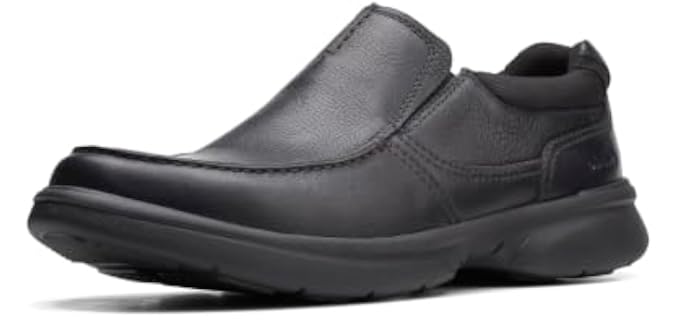
The Clarks Bradley Free is a slip-on leather loafer with a light sole.
- A premium tumbled leather upper gives a polished look.
- An OrthoLite footbed cushions the foot and breathes.
- The lightweight EVA sole absorbs shock, and the slip-on style makes dressing quick.
2
Skechers® Men's Harper Relaxed-Fit Slip-On


The Skechers Relaxed Fit Harper is a slip-on loafer with a roomy cut.
- The Relaxed Fit design gives extra room, and an Air-Cooled Memory Foam insole cushions the foot.
- The full-grain leather upper has elastic side panels for easy on and off, and the collar is padded.
- A lightweight midsole absorbs shock, the rubber outsole grips, and the heel stands 1 1/4 inches tall.
3
Clarks® Women's Cora Daisy Women's Slip-On Loafer


The Clarks Cora Daisy is a women’s slip-on loafer.
- An OrthoLite footbed and smooth textile lining cushion the foot.
- Stretch gores make the loafer easy to slip on.
- The durable TPR outsole grips the floor.
Lace-Up Dress Shoes for Diabetics
4Clarks® Men's Tilden Cap Oxford Cap-Toe Leather Derby


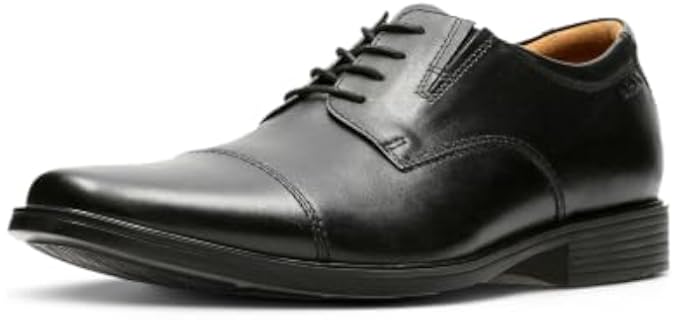
The Clarks Tilden Cap is a lace-up leather derby with a toe cap.
- The leather upper has a classic cap-toe look that suits formal occasions.
- An OrthoLite footbed and soft fabric lining cushion the foot, and the collar is padded.
- The lightweight manmade sole is durable.
5
Dr. Scholl's® Men's Sync Lace-Up Casual Oxford


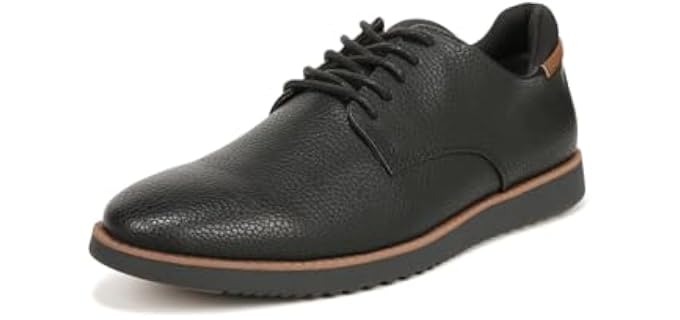
The Dr. Scholl’s Sync is a plain-toe lace-up oxford for the office or a night out.
- A soft neoprene tongue and collar cushion the ankle.
- A Be Free Energy insole has three zones, with extra support under the toe, high-recovery foam at the ball of the foot and dense foam under the heel.
- The upper is faux leather, and the lace-up closure holds the foot securely.
6
Clarks® Men's Cotrell Edge Casual Leather Derby


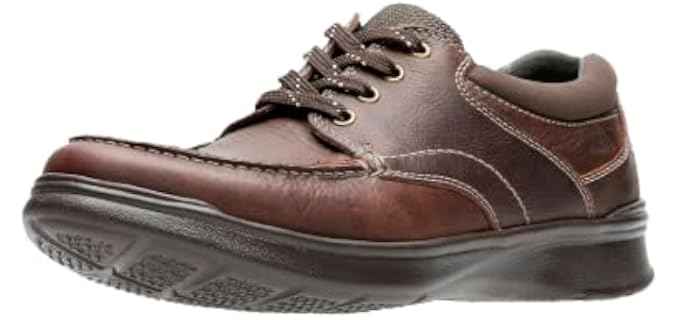
The Clarks Cotrell Edge is a casual lace-up derby with a removable footbed.
- An OrthoLite footbed with Cushion Soft technology cushions the foot.
- The footbed is removable, so you can swap in your own insole or orthotic.
- The heel stands about 1.6 inches tall, and the upper is oily leather.
Index Table: Top Rated Dress Shoes for Diabetics
| No. | Shoe | Image | Features | Brand |
|---|---|---|---|---|
| 1 | Clarks Men's Bradley Free - Slip-On Leather Loafer |  |
| Clarks |
| 2 | Skechers Men's Harper - Relaxed-Fit Slip-On |  |
| Skechers |
| 3 | Clarks Women's Cora Daisy - Women's Slip-On Loafer |  |
| Clarks |
| 4 | Clarks Men's Tilden Cap Oxford - Cap-Toe Leather Derby |  |
| Clarks |
| 5 | Dr. Scholl's Men's Sync - Lace-Up Casual Oxford |  |
| Dr. Scholl's |
| 6 | Clarks Men's Cotrell Edge - Casual Leather Derby |  |
| Clarks |
Importance of Careful Footwear With Diabetes
Diabetes can hide foot injuries from you, so a well-fitting shoe is part of your daily protection. Check your feet each evening, wear shoes and socks at all times, and see your provider about any sore that does not heal.[1]
Sources
- National Institute of Diabetes and Digestive and Kidney Diseases (NIDDK). Diabetes & Foot Problems. Accessed October 26, 2026.
- National Health Service (NHS). Peripheral neuropathy. Accessed October 26, 2026.
Update History
- Oct 2026: Rewrote the article around NIDDK and NHS guidance, added a disclaimer, takeaways, How We Chose section and FAQ, replaced the unrelated falls source and regrouped the shoes into loafers and lace-ups
- Oct 2026: Replaced Clarks Escalade with Clarks Bradley; replaced Orthofeet Gramercy with Clarks Tilden Cap Oxford; replaced Hush Puppies Glen with Dr.Scholl’s SHOES Dr. Scholl’s
- Oct 2026: Added a Key Specs table and a Sources section; checked availability of every product
- Feb 2023: Published


