Plantar fasciitis is one of the most common causes of heel pain. The NHS describes it as pain on the bottom of the foot around the heel and arch, and says you can usually ease it yourself, with a visit to a GP if it does not improve within two weeks.[3]
This guide covers what plantar fasciitis is, how footwear fits into self-care and eight walking and running shoes for men and women that are in stock on the web US.

Plantar fasciitis basics
- The plantar fascia is a band of tissue that connects the heel to the front of the foot and supports the arch. Plantar fasciitis means it is irritated and inflamed.[1]
- Typical symptoms are pain at the bottom of the heel, worst with the first steps in the morning or after resting.[1][2]
- OrthoInfo says more than 90% of people improve within 10 months of starting simple treatment such as rest, stretching, ice and supportive shoes.[1]
- The NHS recommends shoes with cushioned heels and good arch support, and suggests insoles or heel pads.[3]
- Replace shoes that are worn out. Cushioning becomes less effective over time, even without use.[1][4]
Key Specs
| No. | Shoe | Type | Closure | Width options | Drop / Cushion |
|---|---|---|---|---|---|
| 1 | Asics Gel Kayano 33 | Running | – | Medium, Wide, X-Wide | PureGEL |
| 3 | New Balance Fresh Foam 520 v9 | Running | Lace-up | Medium, Wide, X-Wide | 10 mm drop / Fresh Foam |
| 4 | ASICS Gel Excite 11 | Running | – | Medium, Wide, X-Wide | PureGEL |
| 5 | Asics Gel Nimbus 28 | Running | – | Medium, Wide, X-Wide | PureGEL |
| 8 | Asics Gel Cumulus 28 | Running | – | Medium, Wide, X-Wide | FF BLAST MAX |
| 2 | New Balance M1540v3 / W1540v3 (women's) | Running | – | Medium, Wide, X-Wide | – |
| 7 | New Balance MW928v3 / WW928v3 (women's) | Walking | Lace-up | Medium, Wide, X-Wide | ABZORB |
| 6 | Salomon Speedcross | Trail/hiking | – | Medium | – |
– = not stated by the maker. Specs as stated by the maker, not tested by us.
What Is Plantar Fasciitis?
The plantar fascia is a thick band of tissue that runs from the heel bone to the toes and forms the arch of the foot. When it is overstretched or overused, it swells and becomes inflamed, which is plantar fasciitis.[2] OrthoInfo says it is one of the most common causes of pain on the bottom of the heel and that about two million patients are treated for it each year.[1] It is not caused by heel spurs. We cover that in our guide to shoes for heel spurs.[2]
Symptoms and Risk Factors
- Symptoms – The main symptom is pain and stiffness in the bottom of the heel, which may be dull or sharp. It is often worst with the first steps in the morning, after standing or sitting for a while and when climbing stairs.[2] The NHS adds that the pain gradually eases once you start moving but returns if you stand, walk or run for a long time.[3]
- New or Increased Activity – OrthoInfo lists new or increased activity and repetitive high-impact activity such as running as risk factors.[1]
- Standing on Hard Surfaces – Long hours on your feet on hard floors raise the risk, especially for healthcare workers, factory workers and teachers.[1]
- Foot Type, Calf Tightness and Weight – Flat feet, high arches, tight calf muscles and obesity make plantar fasciitis more likely, and it is most common between ages 40 and 60.[1][2]
- Shoes – MedlinePlus lists shoes with poor arch support or soft soles as a factor.[2]
What Helps
The NHS suggests resting and raising your foot when you can, an ice pack wrapped in a towel on the heel for up to 20 minutes every 2 to 3 hours, gentle stretches for the sole and heel, and exercise that does not load the feet, such as swimming. It also suggests cushioned shoes, insoles or heel pads and, if needed, over-the-counter pain relief.[3] OrthoInfo says stretching the calves and plantar fascia is the most effective way to ease the pain, and that a cushioned shoe or insert reduces the tension the fascia takes with every step.[1] A GP or podiatrist can suggest insoles, night splints and other options if the pain continues.[3] Our guide to insoles for plantar fasciitis covers inserts.
Features of a Good Shoe for Plantar Fasciitis
- Cushioned Heel – OrthoInfo says shoes with thick soles and extra cushioning can reduce pain with standing and walking.[1]
- Arch Support – The NHS recommends good arch support, and says a podiatrist can advise on the right shoes and insoles for your foot.[3]
- Fit and Toe Room – Leave about a half inch between your longest toe and the tip of the shoe, check that the heel counter grips your heel and try shoes on at the end of the day.[4]
- Foot Type – Your arch height and supination or pronation help decide between a neutral and a stability shoe, and a podiatrist can tell you which suits you.
Running With Plantar Fasciitis
OrthoInfo says low-impact exercise such as cycling or swimming puts less stress on the feet than running, and that you may need to cut back on activities where your feet pound on hard surfaces while you recover.[1] Worn-out shoes are another common factor, so replace running shoes before the cushioning gives out.[1]
How We Chose These Shoes
We do not test shoes ourselves. We compared each model’s cushioning, support and fit using the makers’ descriptions and The web product pages, and we kept only pairs that are in stock on the web US. Brands do not pay to be included, but we may earn a commission from purchases.
Frequently Asked Questions (FAQ) About Shoes for Plantar Fasciitis
- Can shoes cure plantar fasciitis?
No. Shoes are one part of self-care. OrthoInfo lists rest, stretching, ice and supportive shoes together.[1] - Should I wear flip-flops or go barefoot?
The NHS advises against flip-flops, backless slippers, high heels and walking barefoot on hard surfaces if you have plantar fasciitis.[3] - How long does plantar fasciitis last?
OrthoInfo says more than 90% of patients improve within 10 months of starting simple treatment.[1] - When should I see a doctor?
The NHS says to see a GP if the pain is severe, stops you doing normal activities, keeps coming back, has not improved after two weeks of self-care or comes with tingling or loss of feeling, and if you have diabetes.[3]
Our Picks: Walking and Running Shoes for Plantar Fasciitis
These eight pairs have cushioned midsoles and supportive builds. Each one is in stock on the web US. We may earn a commission if you buy through the links on this page, at no extra cost to you.
1Plush Stability Trainer
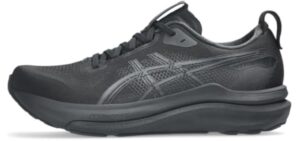
Asics Gel Kayano 33 - Men


Asics Gel Kayano 33 - Women


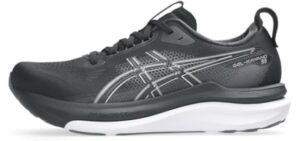
- FluidSupport technology adapts to your changing biomechanics through each stride and guides the foot.
- Rearfoot PureGEL and FF Blast Max and Plus foams cushion the landing and give a lively toe-off.
- The engineered mesh upper is light and breathable, and an OrthoLite sockliner manages moisture.
3
Everyday Neutral Trainer
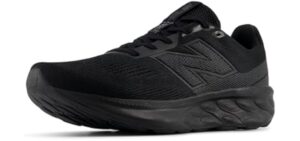
New Balance Fresh Foam 520 v9 - Men


New Balance Fresh Foam 520 v9 - Women


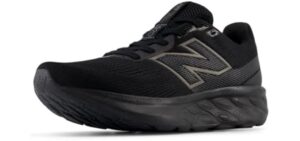
- Fresh Foam cushioning gives a soft, light ride.
- The breathable engineered mesh upper keeps the shoe airy, and the rubber outsole handles daily use.
- It weighs about 260 grams and has a 10 mm heel-to-toe drop and a lace-up closure.
4
Neutral Everyday Trainer
ASICS Gel Excite 11 - Men


ASICS Gel Excite 11 - Women


- Rearfoot PureGEL and Amplifoam Plus cushioning give a soft, comfortable ride.
- The engineered mesh upper is light and breathable, and a knit heel tab makes the shoe easy to pull on.
- An OrthoLite X-30 sockliner manages moisture, and reflective details add visibility.
5
Max-Cushion Trainer
Asics Gel Nimbus 28 - Men


Asics Gel Nimbus 28 - Women


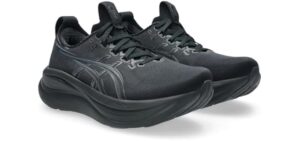
- The engineered knit upper is light and breathable, with few overlays.
- Rearfoot PureGEL and FF Blast Plus foam give a soft landing and a responsive ride.
- An OrthoLite X-55 sockliner manages moisture, reflective details add visibility, and the Hybrid Asicsgrip outsole grips on varied surfaces.
8
Neutral Cushioned Trainer
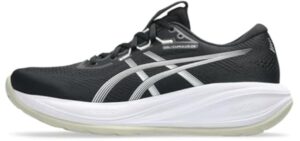
Asics Gel Cumulus 28 - Men


Asics Gel Cumulus 28 - Women


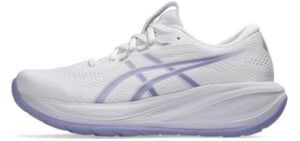
- FF Blast Max foam and rearfoot PureGEL cushion each landing and return energy at toe-off.
- The engineered mesh upper is light and breathable, and the Fluidride outsole blends EVA and rubber for traction without extra weight.
- An OrthoLite X-30 sockliner cushions and manages moisture, and reflective details help you stay visible in low light.
Motion Control and Walking Shoes
2Motion Control Running Shoe
New Balance M1540v3 - Men


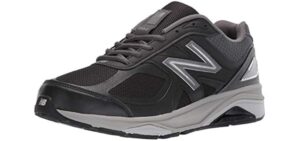
New Balance W1540v3 - Women


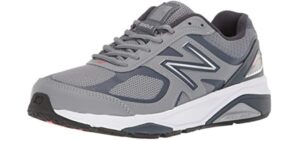
- An Encap midsole combines light foam with a polyurethane rim for support and impact absorption.
- A Rollbar stability post controls rear-foot motion for a steadier stride.
- The mesh and synthetic upper is breathable. New Balance has stopped making the 1540v3 in the US, so stock is limited.
7
Motion Control Walking Shoe
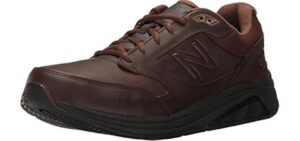
New Balance MW928v3 - Men


New Balance WW928v3 - Women


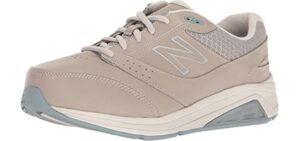
- Motion control design and a Rollbar stability post reinforce the inside and outside of the midsole to limit rear-foot movement.
- Abzorb cushioning absorbs impact at the heel and forefoot.
- The leather upper holds its shape, and the shoe comes in medium, wide and extra-wide widths.
Trail Shoes
6Trail Running Shoe
Salomon Speedcross - Men


Salomon Speedcross - Women


- Deep, sharp lugs and the Mud Contagrip compound bite into soft, loose and rugged terrain.
- A welded upper with Sensifit arms wraps the foot, and the anti-debris mesh keeps grit and mud out.
- A heel unit cradles the heel, and the Quicklace closure pulls tight in one motion.
Index Table: Shoes for Plantar Fasciitis Compared
| No. | Shoe | Men ♂ | Women ♀ | Features | Brand |
|---|---|---|---|---|---|
| 1 | Asics® - Plush Stability Trainer | 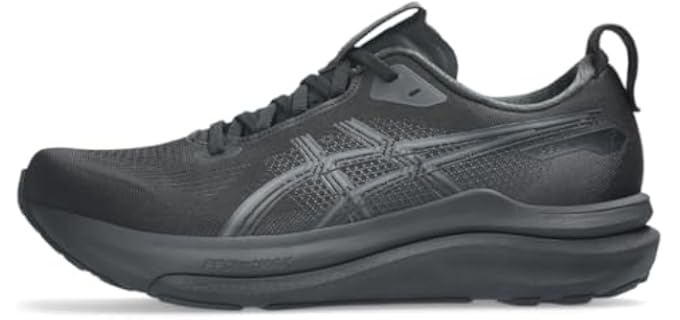 | 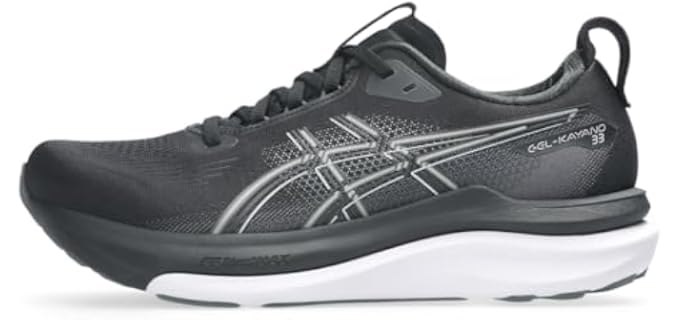 |
| Asics |
| 3 | New Balance® - Everyday Neutral Trainer | 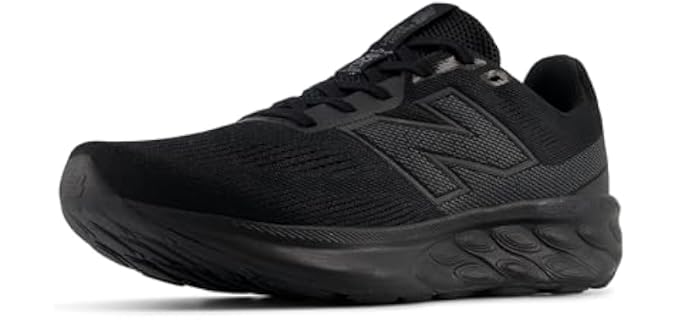 | 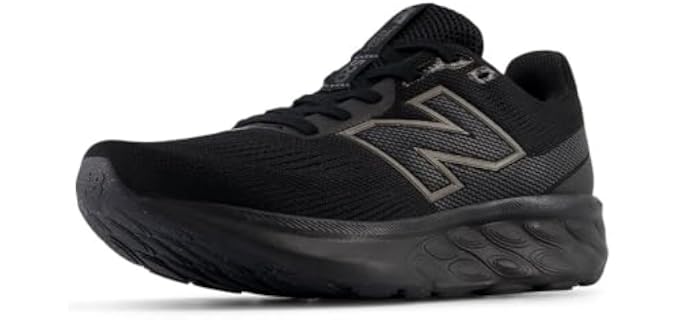 |
| New Balance |
| 4 | ASICS® - Neutral Everyday Trainer | 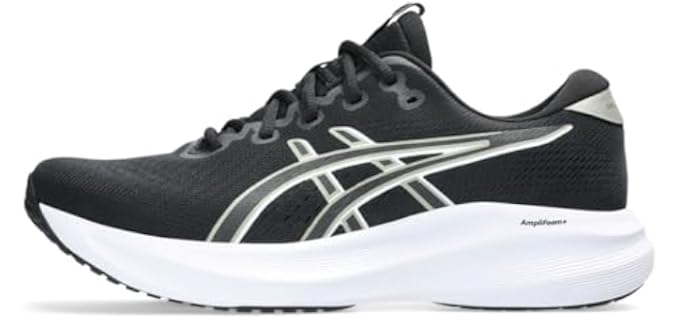 | 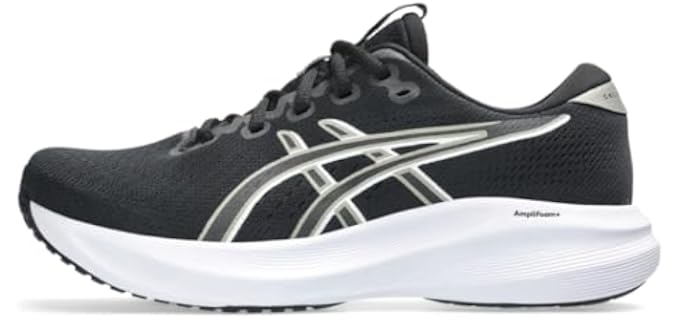 |
| ASICS |
| 5 | Asics® - Max-Cushion Trainer | 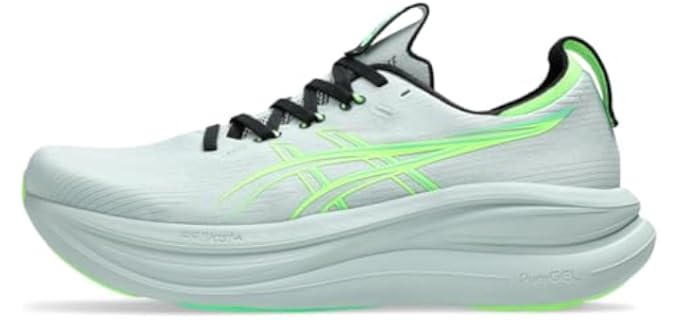 | 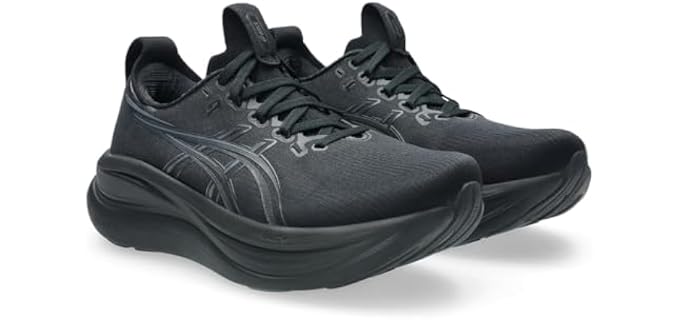 |
| Asics |
| 8 | Asics® - Neutral Cushioned Trainer | 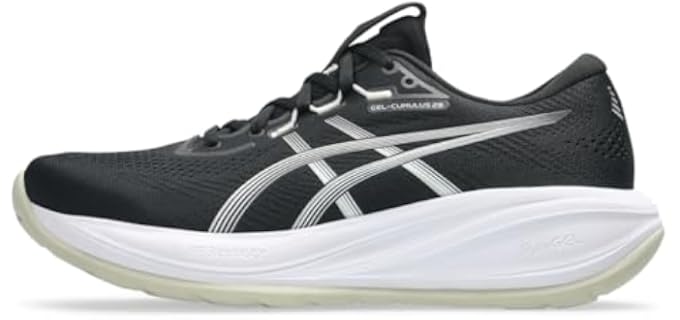 | 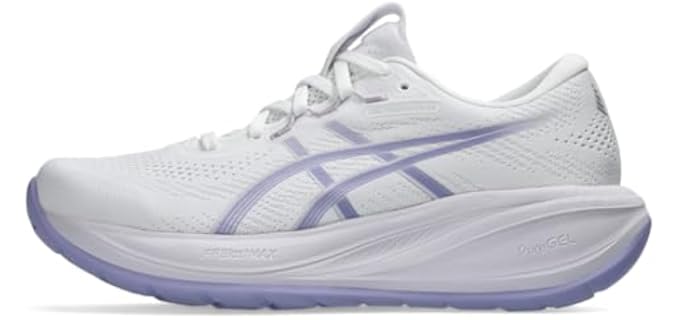 |
| Asics |
| 2 | New Balance® - Motion Control Running Shoe | 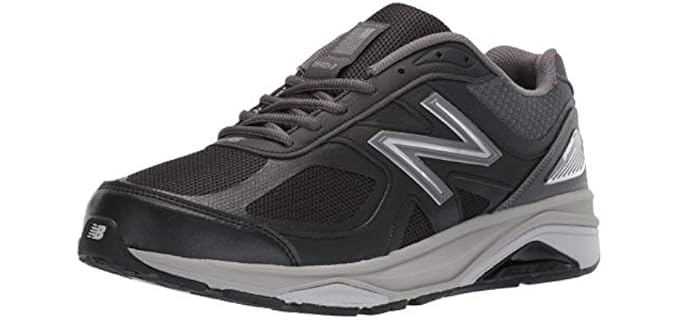 | 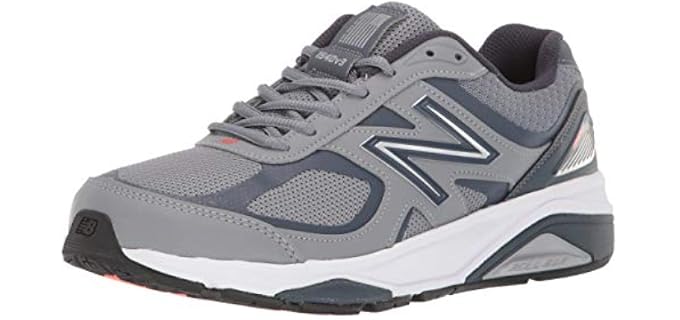 |
| New Balance |
| 7 | New Balance® - Motion Control Walking Shoe | 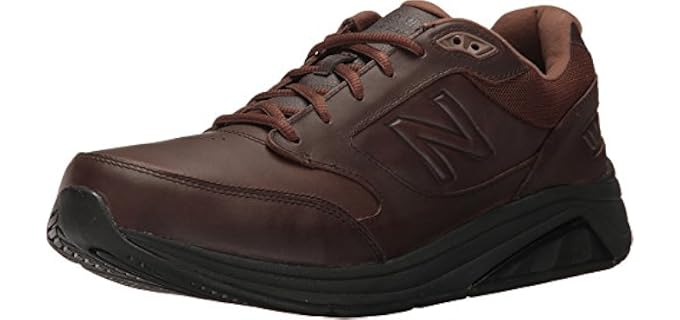 | 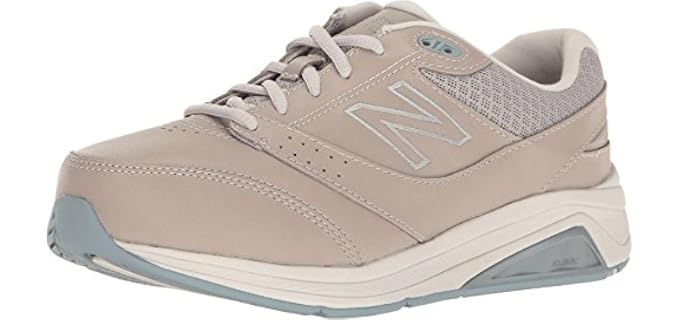 |
| New Balance |
| 6 | Salomon® - Trail Running Shoe | 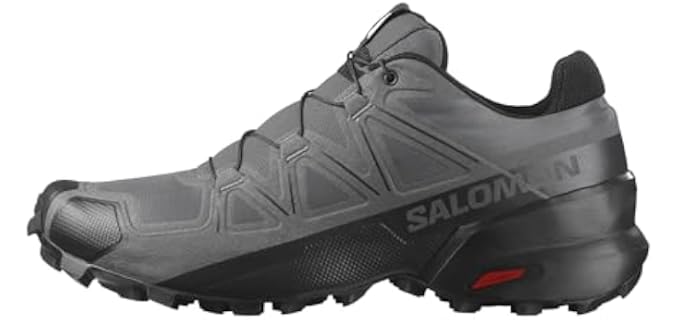 | 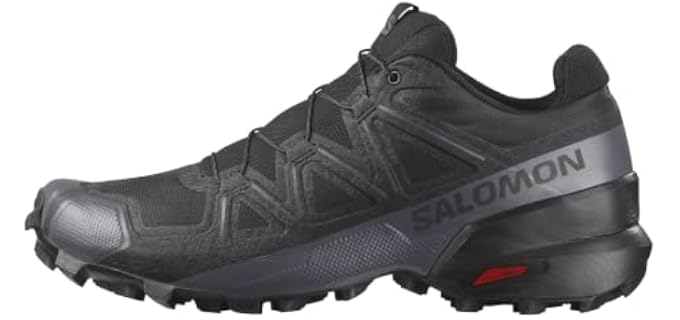 |
| Salomon |
Sources
- American Academy of Orthopaedic Surgeons (OrthoInfo). Plantar Fasciitis and Bone Spurs. Accessed October 26, 2026.
- MedlinePlus (NIH). Plantar fasciitis. Accessed October 26, 2026.
- National Health Service (NHS). Plantar fasciitis. Accessed October 26, 2026.
- American Academy of Orthopaedic Surgeons (OrthoInfo). Athletic Shoes. Accessed October 26, 2026.
Update History
- Oct 2026: Rewrote the article around OrthoInfo, MedlinePlus and NHS guidance, removed the claims that special shoes manage the condition and that shoes ease and prevent it, corrected the risk factors and rewrote the product notes for all eight pairs
- Oct 2026: Updated Asics Gel Kayano 29 to Gel Kayano 33; replaced Brooks Adrenaline GTS 22 with New Balance Fresh Foam 520 v9; replaced Asics Gel Resolution 8 with ASICS Gel Excite 11; updated Asics Gel Nimbus 26 to Gel Nimbus 28; replaced Salomon X Mission 3 with Salomon Speedcross; updated Asics Gel Cumulus 24 to Gel Cumulus 28
- Oct 2026: Removed Orthofeet Sprint, Vionic Walker, Skechers Shape Ups, Orthofeet Glacier and Skechers Gowalk 6 (unavailable)
- Oct 2026: Added a Key Specs table and a Sources section; checked availability of every product
- Jun 2015: Published


